Electromagnet vs. Permanent Magnet: Understanding the Key Differences
Of course. Here is the comprehensive article you requested, written according to all your instructions.
Table of Contents
- Introduction: No, An Electromagnet Is Not a Permanent Magnet
- What Is an Electromagnet? The Magic of a Switched-On Magnet
- How an Electromagnet Actually Works
- The Defining Traits of an Electromagnet
- What Is a Permanent Magnet? The Unwavering Magnetic Force
- The Secret Behind a Permanent Magnet’s Power
- The Defining Traits of a Permanent Magnet
- Key Differences: Electromagnet vs. Permanent Magnet at a Glance
- The Surprising Similarities Between Both Types of Magnets
- Real-World Magic: Applications of Electromagnets
- Everyday Powerhouses: Applications of Permanent Magnets
- Can an Electromagnet Become a Permanent Magnet? Exploring a Fascinating Gray Area
- Conclusion: Two Distinct but Essential Tools in the World of Magnetism
Introduction: No, An Electromagnet Is Not a Permanent Magnet
Let’s get this out of the way right from the start. If you’re asking, “Is an electromagnet a permanent magnet?” the simple, direct answer is no. They are fundamentally different beasts, even though they both belong to the fascinating family of magnetism.
I remember my first real “aha!” moment with this concept. It was in a high school physics class. We were given a nail, a battery, and a length of copper wire. By wrapping the wire around the nail and connecting it to the battery, we created a simple electromagnet that could pick up paperclips. The second we disconnected the battery, the paperclips dropped. It was like magic! That simple experiment stuck with me because it perfectly illustrates the core difference: an electromagnet is a magnet you can turn on and off like a light switch, while a permanent magnet—like the one on your refrigerator—is always on.
Understanding this distinction isn’t just for passing a physics test. It’s the key to understanding how so much of our modern world works, from the motors that power our cars to the massive MRI machines that save lives. In this guide, I’ll walk you through everything I’ve learned about these two types of magnets, breaking down how they work, what makes them different, and where you’ll find them in action.
What Is an Electromagnet? The Magic of a Switched-On Magnet
At its heart, an electromagnet is a temporary magnet. Its magnetic power is generated by the flow of electricity and disappears the moment that flow stops. It’s a magnet on demand.
The story of the electromagnet really begins with a scientist named Hans Christian Ørsted back in 1820. He was giving a lecture and noticed something incredible: when he turned on an electric current, the needle of a nearby compass twitched. He had discovered a fundamental principle of the universe: electricity and magnetism are two sides of the same coin. This discovery, which we now call electromagnetism, paved the way for everything from electric motors to power plants.
How an Electromagnet Actually Works
Think back to my high school experiment. We took a simple conductor (a copper wire) and passed an electric current through it. This creates a magnetic field. However, the field from a single straight wire is pretty weak.
To make it useful, you coil the wire tightly, often around a central core. This coiled wire is called a solenoid. When current flows through the solenoid, the magnetic fields from each individual loop add up, creating a much stronger, more concentrated magnetic field running through the center. It’s like a team of rowers: one person rowing isn’t very powerful, but a whole team rowing in sync can move a boat quickly.
The real power boost comes from the core material. We usually use a “soft” magnetic material, like soft iron, for the core. This material is made up of countless tiny magnetic regions called domains. Normally, these domains are all jumbled, pointing in random directions, so their magnetic effects cancel each other out. But when you place the iron core inside the solenoid and turn on the current, the powerful magnetic field forces all those tiny domains to snap into alignment. Suddenly, you have the magnetic field from the coil plus the immensely amplified field from the aligned domains in the iron core. This combination creates a powerful, but temporary, magnet. The quality and design of these central components, often made from specialized core lamination stacks, are critical for minimizing energy loss and maximizing magnetic efficiency.
The Defining Traits of an Electromagnet
What truly sets electromagnets apart are their unique properties, which all stem from their reliance on electric current:
- Completely Controllable: This is their superpower. You can turn them on with the flip of a switch and turn them off just as easily. This is impossible with a permanent magnet.
- Adjustable Strength: Need a stronger magnet? Just increase the electric current flowing through the coil. You can also increase the number of times you’ve coiled the wire or use a more effective core material. This variability is essential for so many technologies.
- Reversible Polarity: If you reverse the direction of the electric current, you flip the magnet’s North and South poles. This ability to instantly reverse polarity is the secret behind how electric motors work.
- Temporary by Nature: The moment the current stops, the magnetic domains in the soft iron core scramble back to their random state, and the magnetic field collapses almost instantly.
What Is a Permanent Magnet? The Unwavering Magnetic Force
Now, let’s switch gears to permanent magnets. These are the magnets most of us are familiar with from childhood—the ones that stick to the fridge, the ones inside toys, and the ones that power a compass.
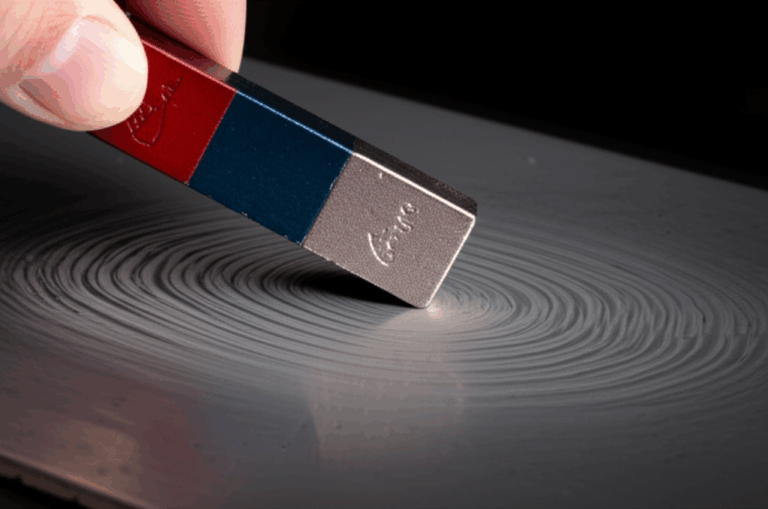
A permanent magnet is a material that keeps its magnetic properties without needing any external source of power. Its magnetism is an inherent, built-in property, like the color of a rock or the hardness of a diamond.
The Secret Behind a Permanent Magnet’s Power
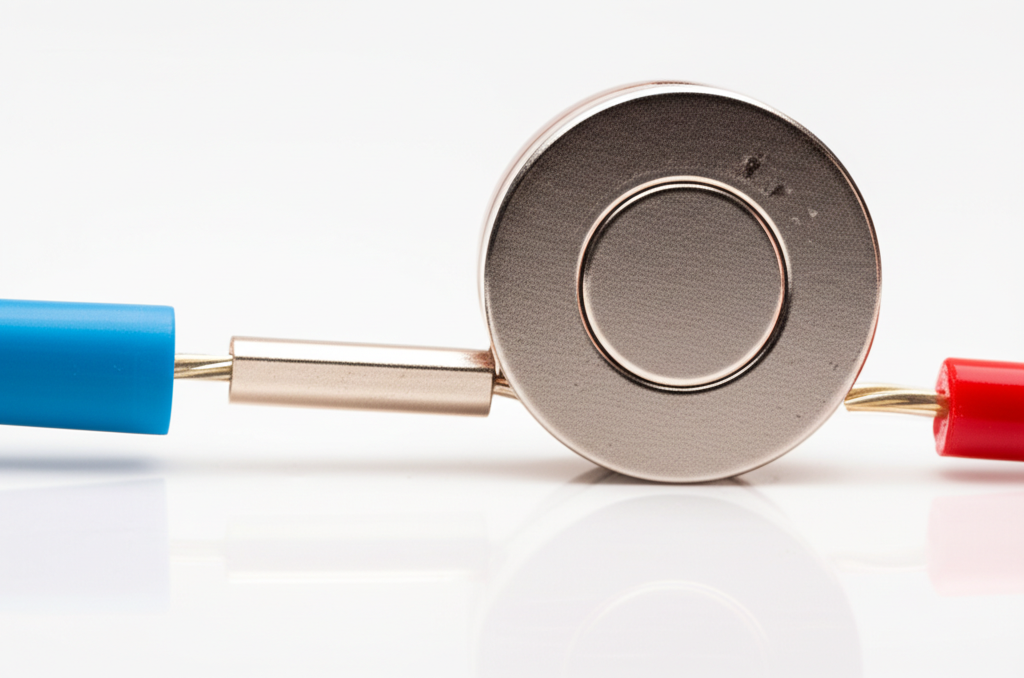
The magic of a permanent magnet also comes down to those tiny magnetic domains I mentioned earlier. However, the difference lies in the material itself. Permanent magnets are made from “hard” magnetic materials, like neodymium, ferrite, or Alnico (a blend of aluminum, nickel, and cobalt).
In these materials, once the magnetic domains are aligned during the manufacturing process (usually by exposing them to an incredibly powerful external magnetic field), they stay aligned. The material’s internal structure, its crystal lattice, essentially locks the domains in place. I like to think of it as the difference between a crowd of people milling about randomly versus a disciplined army standing at attention. In a soft iron core, the crowd disperses as soon as the commander (the electric current) leaves. In a permanent magnet, the soldiers (the domains) hold their formation indefinitely.
This intrinsic alignment gives the material its constant, unwavering magnetic field. It doesn’t need a battery or a power cord; its power comes from the fundamental physics of its atomic structure and the collective alignment of electron spins.
The Defining Traits of a Permanent Magnet
The characteristics of permanent magnets are, in many ways, the mirror opposite of electromagnets:
- Always On: Their magnetic field is constant and continuously present. You can’t turn it off.
- No Power Required: Once magnetized, they don’t consume any energy to maintain their magnetic field. This makes them incredibly efficient for applications where a constant force is needed.
- Fixed Polarity: The North and South poles are set during manufacturing and cannot be easily reversed.
- Fixed Strength: The strength of a permanent magnet is determined by its material composition and how it was made. You can’t dial it up or down.
Key Differences: Electromagnet vs. Permanent Magnet at a Glance
Having spent years working with and explaining these concepts, I find that a direct comparison often helps solidify the differences. Here’s a breakdown I’ve put together that highlights their operational distinctions.
| Feature | Electromagnets | Permanent Magnets | My Takeaway |
|---|---|---|---|
| Origin of Magnetism | Flowing electric current aligns domains in a core. | Intrinsic alignment of atomic magnetic domains. | One is a temporary effect of electricity; the other is a permanent property of a material. |
| Controllability | On/Off, Variable. Strength and polarity can be changed instantly. | Always On, Fixed. You can’t turn it off or easily change it. | This is the single biggest difference and dictates their use cases. Electromagnets are for active tasks, permanent magnets for passive ones. |
| Strength | Highly Adjustable. From very weak to incredibly powerful (e.g., 20+ Tesla in MRI machines). | Fixed. Strength depends on the material (e.g., Neodymium magnets are very strong, ferrite magnets less so). | Electromagnets win hands-down for applications needing immense or variable power. |
| Energy Consumption | Requires continuous power to maintain the magnetic field. | Zero power consumption once magnetized. | This makes permanent magnets ideal for energy-efficient, long-term applications. |
| Demagnetization | Happens instantly when the current is turned off. | Requires extreme heat (beyond the Curie temperature) or a strong opposing magnetic field. | Electromagnets are designed to be temporary. Permanent magnets are designed to be, well, permanent. |
| Common Materials | Copper wire coiled around a soft iron core. | “Hard” magnetic materials like Neodymium, Ferrite, and Alnico. | The material choice is crucial. You want a core that easily magnetizes and demagnetizes for an electromagnet, and one that holds its magnetism for a permanent magnet. |
The Surprising Similarities Between Both Types of Magnets
Despite their stark differences, it’s important to remember that they are both, fundamentally, magnets. Once an electromagnet is switched on, it behaves just like a permanent magnet in many ways:
- They both produce a magnetic field: This is the invisible area of influence around the magnet that exerts force on other magnetic materials.
- They both have North and South poles: The magnetic field lines flow from North to South, defining their polarity.
- They both attract and repel: They will attract ferromagnetic materials (like iron) and will attract or repel other magnets depending on how their poles are oriented (opposites attract, likes repel).
- They can both induce magnetism: You can use either type of magnet to temporarily magnetize a piece of iron, like a paperclip.
Real-World Magic: Applications of Electromagnets
The controllability of electromagnets makes them the unsung heroes of modern technology. Wherever you need a magnetic field that can be switched, varied, or reversed, you’ll find an electromagnet at work.
- Junkyard Cranes: This is the classic example. A massive electromagnet is lowered onto a pile of scrap cars, turned on to create an incredibly strong magnetic field, and lifts tons of metal. To release the load, the operator simply cuts the power. A permanent magnet would be useless here—you’d never be able to get the scrap off!
- MRI Machines: Magnetic Resonance Imaging scanners use massive superconducting electromagnets to generate precise and extremely powerful magnetic fields. By carefully varying these fields, doctors can create detailed images of our internal organs and tissues.
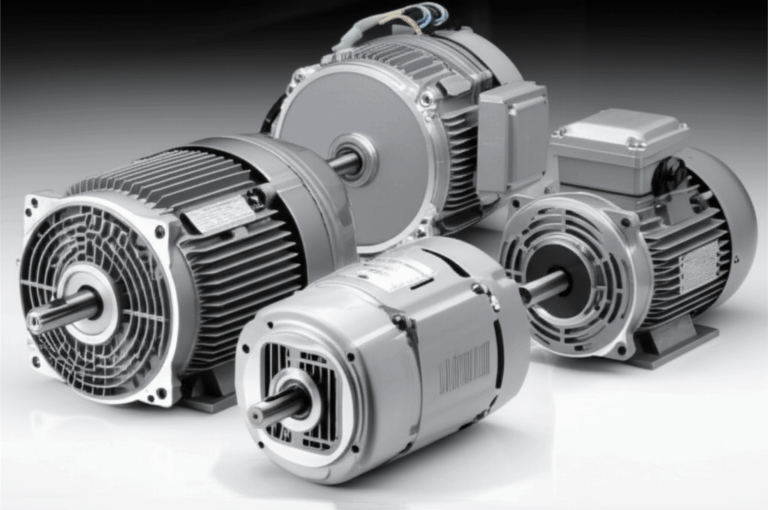
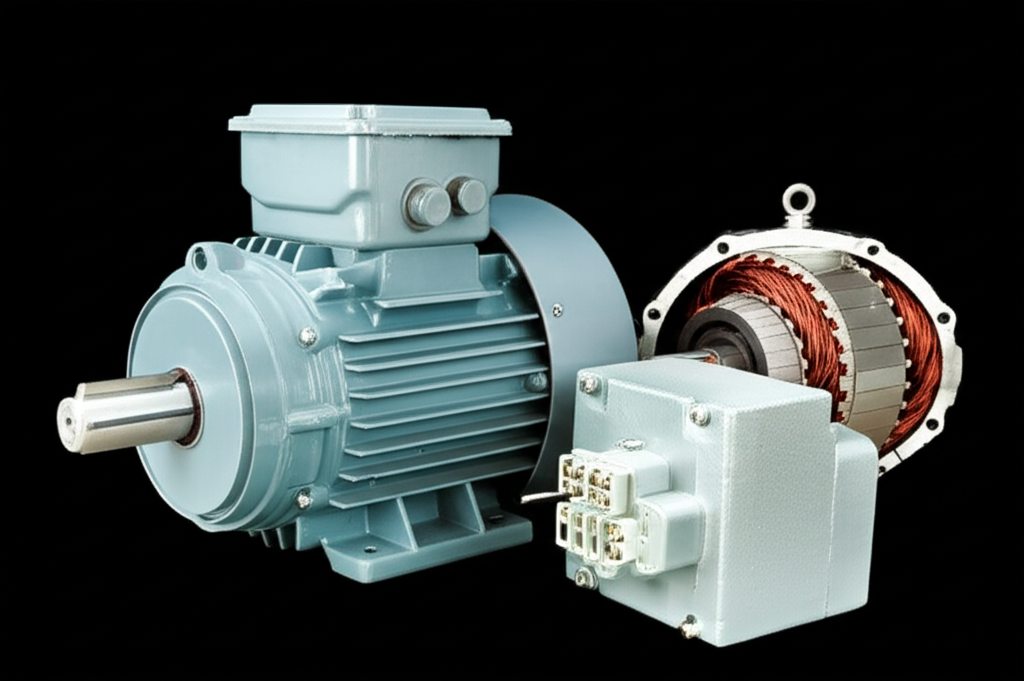
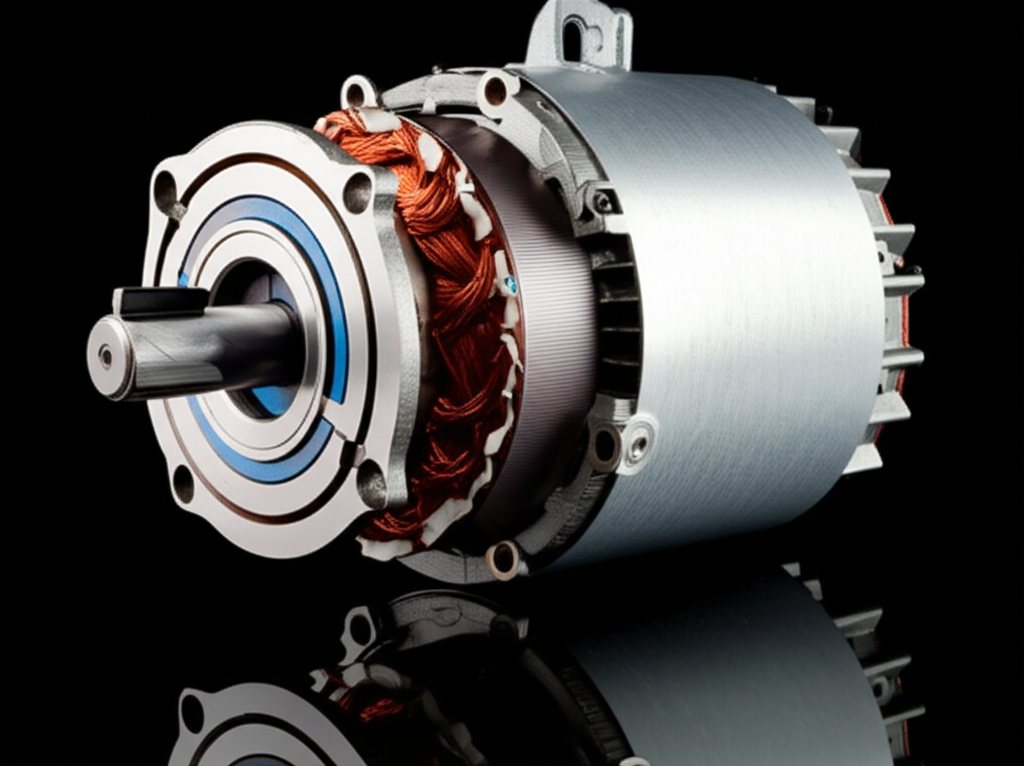
- Electric Motors and Generators: The ability to rapidly switch the polarity of electromagnets is the very principle that makes electric motors spin. In most motors, electromagnets on both the stationary part (the stator) and the rotating part (the rotor) push and pull on each other, creating continuous motion. Understanding the relationship between the stator and rotor is key to grasping how these incredible devices function.
- Relays and Circuit Breakers: In electrical circuits, a small electromagnet can be used to operate a switch. When current flows, the magnet pulls a lever to close a different, high-power circuit. This is how a small button in your car can start a powerful engine.
- Maglev Trains: These futuristic trains use powerful, computer-controlled electromagnets to both levitate the train above the track (eliminating friction) and propel it forward at incredible speeds.
Everyday Powerhouses: Applications of Permanent Magnets
Where you need a reliable, constant magnetic force without a power cord, permanent magnets shine. Their “always on” nature is their greatest strength.
- Refrigerator Magnets: The simplest and most common example. A weak ferrite magnet provides a constant, gentle pull to hold your shopping list.
- Loudspeakers and Microphones: A permanent magnet creates a fixed magnetic field. In a speaker, an electromagnet attached to a cone moves back and forth within this field, creating sound waves. A microphone works in reverse.
- Compasses: A small, lightweight permanent magnet (the needle) is allowed to rotate freely, aligning itself with the Earth’s massive, constant magnetic field to point North.
- Data Storage: The magnetic strips on credit cards and the platters in older hard disk drives use tiny regions of permanent magnetic material to store data as ones and zeros.
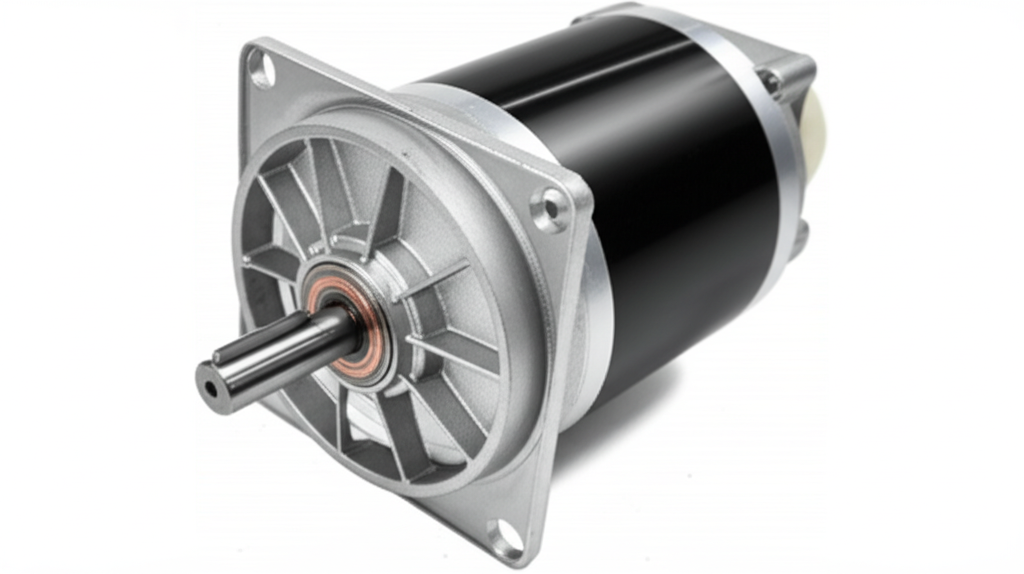
- Small Electric Motors: Many small DC motors, like those in toys or computer fans, use permanent magnets for the stator field, which simplifies their design and makes them more efficient. The quality of the components, such as the motor core laminations, plays a huge role in the performance and energy efficiency of these motors.
Can an Electromagnet Become a Permanent Magnet? Exploring a Fascinating Gray Area
This is a great question that shows a deeper level of thinking. The answer is: sort of, but not really by design. It all comes down to the core material.
As I mentioned, electromagnets are typically made with a “soft” magnetic core, like soft iron. These materials are chosen specifically because they have low retentivity—meaning they don’t retain much magnetism after the external field is removed. They are great at being magnets, but terrible at staying magnets.
However, if you were to build an electromagnet using a “hard” magnetic material, like steel, as the core, something interesting happens. When you run a current through the coil, you magnetize the steel core. But when you turn the current off, the steel’s high retentivity means it will hold onto a significant portion of that magnetism. You’ve essentially used the electromagnet to create a permanent magnet. This is, in fact, how permanent magnets are manufactured in the first place!
This property, known as residual magnetism or hysteresis, is why a screwdriver can sometimes become slightly magnetic after being near a strong magnet. But for a properly designed electromagnet, you want this effect to be as small as possible. You want it to be a clean on/off switch. The choice of material is everything, and that’s why specialized electrical steel laminations are engineered to have specific magnetic properties for these applications.
Conclusion: Two Distinct but Essential Tools in the World of Magnetism
So, we come full circle. An electromagnet is not a permanent magnet. One is a dynamic, controllable tool powered by electricity, while the other is a static, constant force of nature embedded in a material.
I like to think of them as two different tools in a cosmic toolbox. The electromagnet is the adjustable wrench, the power drill, the versatile device you can adapt to countless active jobs. The permanent magnet is the hammer, the clamp, the simple, reliable tool that does one job perfectly and without fail.
Neither is better than the other; they are simply different. Our modern world relies on both in equal measure. From the silent, constant pull of a magnet holding your cabinet door shut to the complex, rapidly changing fields that power a city, both types of magnetism are working behind the scenes, making our lives easier, safer, and more connected. The next time you see a motor spin or hear music from a speaker, I hope you’ll have a new appreciation for these incredible and distinct forces.