How Do Permanent Magnets Work? Unlocking the Science Behind Magnetic Attraction
Have you ever stuck a magnet to your fridge and wondered, “How does it do that?” It seems like magic. This small object creates an invisible force that can pull things, push them away, or just hang on for dear life. It’s a mystery you see every day. Not understanding it can feel frustrating, especially when so much of our modern world, from electric cars to the speakers playing your favorite song, depends on this “magic.” This article will pull back the curtain. We’ll explore the amazing science behind permanent magnets, from the tiniest particles to the powerful fields they create. You’ll learn why some materials can become magnets and others can’t. By the end, the magic will become science you understand.
Table of Contents
- What Makes Something Magnetic in the First Place?
- What Are Magnetic Domains?
- How Do You Make a Permanent Magnet?
- What Keeps a Magnet “Permanent”?
- Are All Permanent Magnets the Same?
- How Does a Magnetic Field Actually Work?
- Can a Permanent Magnet Lose Its Power?
- Where Do We Use Permanent Magnets Every Day?
- How Are Permanent Magnets Different from Electromagnets?
- Is Magnetism Bigger Than Just My Fridge?
- Key Things to Remember
What Makes Something Magnetic in the First Place?
The secret to magnetism starts incredibly small. It begins inside atoms, the tiny building blocks of everything. Inside every atom are even tinier particles called electrons. You can think of each electron as a tiny spinning top. Because it’s spinning and has an electric charge, each electron creates its own minuscule magnetic field. This is called the electron spin, and it’s the foundation of all atomic magnetism. It gives each electron its own tiny north and south poles. This property is also known as the electron magnetic moment.
So, if all atoms have electrons, why isn’t everything magnetic? In most materials, electrons form pairs. When they pair up, one spins up and the other spins down. Their tiny magnetic fields cancel each other out. It’s like two tiny magnets with their north poles pointing at each other—they push each other away and their forces disappear. But some special materials are different. Ferromagnetic materials, like iron, nickel, and cobalt, have a special atomic structure. Their atoms have several unpaired electrons all spinning in the same direction. These lonely, unpaired electrons don’t have a partner to cancel them out. Their tiny magnetic forces add up, making each atom a small but mighty magnet. This is what makes a material magnetic.
What Are Magnetic Domains?
Even if a piece of iron has atoms that are tiny magnets, the whole piece of iron isn’t usually a magnet itself. Why not? Because the atoms need to work together. This is where magnetic domains come in. Imagine a big city divided into thousands of tiny neighborhoods. In each neighborhood, all the houses face the same direction. A magnetic domain is like one of these neighborhoods. It’s a microscopic region inside the iron where billions of atoms have their magnetic fields aligned, all pointing in the same direction. This alignment happens because of a powerful quantum mechanics force called the exchange interaction. The line between these domains is called a domain wall or a Bloch wall.
In a normal, unmagnetized piece of iron, these domains are a jumbled mess. It’s like a city map where the neighborhoods are all pointing in random directions. One domain might point up, the one next to it might point left, and another might point down. Because they are all pointing in different directions, their magnetic forces cancel each other out. The piece of iron has no overall magnetic power. It won’t stick to your fridge. To become a magnet, these jumbled domains need to get organized.
How Do You Make a Permanent Magnet?
Turning a regular piece of ferromagnetic material into a magnet is called the magnetization process. You have a material filled with messy, disorganized magnetic domains. This is a problem if you want to create a useful magnetic force. The random directions mean you have zero power. You need a way to get them all pointing the same way, like a disciplined army instead of a confused crowd. This is where a strong external magnetic field comes in.
To make a permanent magnet, a manufacturer places the material inside a very powerful electromagnet. When they turn the power on, the external magnetic field acts like a drill sergeant shouting orders to the magnetic domains. Two things happen. First, domains that are already mostly aligned with the field will grow, taking over the space of their misaligned neighbors. This is called domain wall movement. Second, the domains that are pointing the wrong way will rotate until they snap into alignment with the external field. Once almost all the domains are aligned, the material reaches magnetic saturation. It’s now as magnetic as it can possibly be.
What Keeps a Magnet “Permanent”?
After you’ve done all that work to align the domains, you turn off the giant electromagnet. What happens next is what separates a temporary magnet from a permanent magnet. In some materials, called soft magnetic materials, the domains quickly get messy again. But in hard magnetic materials, the domains stay locked in their aligned positions. This ability to stay magnetized is what makes a permanent magnet “permanent.”
Two important properties define this permanence. The first is Retentivity, which measures how much magnetic strength the material keeps after the external field is removed. This is its residual magnetism. The second is Coercivity, which is a measure of the material’s resistance to being demagnetized by an opposing magnetic field. Think of it as magnetic stubbornness. A good permanent magnet has high retentivity and high coercivity. Scientists can show this on a graph called a Hysteresis loop, which shows how a material responds to being magnetized and demagnetized. Materials with a wide loop are great for permanent magnets. This is also influenced by magnetic anisotropy, where the material has a preferred “easy” direction for magnetization.
Are All Permanent Magnets the Same?
Not at all! You wouldn’t use the same tool for every job and choosing the right magnet is just as important. Different types of permanent magnets are made from different materials, giving them unique strengths and weaknesses. Trying to build a high-powered electric motor with a weak magnet will only lead to disappointment and failure. The motor won’t have enough torque and will overheat. The solution is to understand the materials and choose the right one for the job.
The most powerful ones are rare-earth magnets. A Neodymium magnet (made of neodymium, iron, and boron) is the superstar. It’s incredibly strong but can rust and doesn’t handle high heat well. A Samarium-cobalt magnet is also very strong and has excellent temperature stability, making it great for aerospace or military uses. On the other hand, Ferrite magnets, also called ceramic magnets, are much cheaper and don’t rust, but they are weaker. You’ll find them in fridge magnets and simple DC motors. Finally, Alnico magnets (aluminum, nickel, cobalt) are great for high temperatures and have been around for a long time, often used in sensors and guitar pickups.
Here’s a quick comparison:
| Feature / Magnet Type | Neodymium (NdFeB) | Samarium-Cobalt (SmCo) | Ferrite (Ceramic) | Alnico |
|---|---|---|---|---|
| Magnetic Strength | Very High | High | Moderate | Good |
| Heat Resistance | Poor to Good | Excellent | Good | Excellent |
| Cost | High | High | Low | Moderate |
| Key Applications | EV motors, hard drives, MRI | High-temp motors, aerospace | Loudspeakers, fridge magnets | Sensors, guitar pickups |
How Does a Magnetic Field Actually Work?
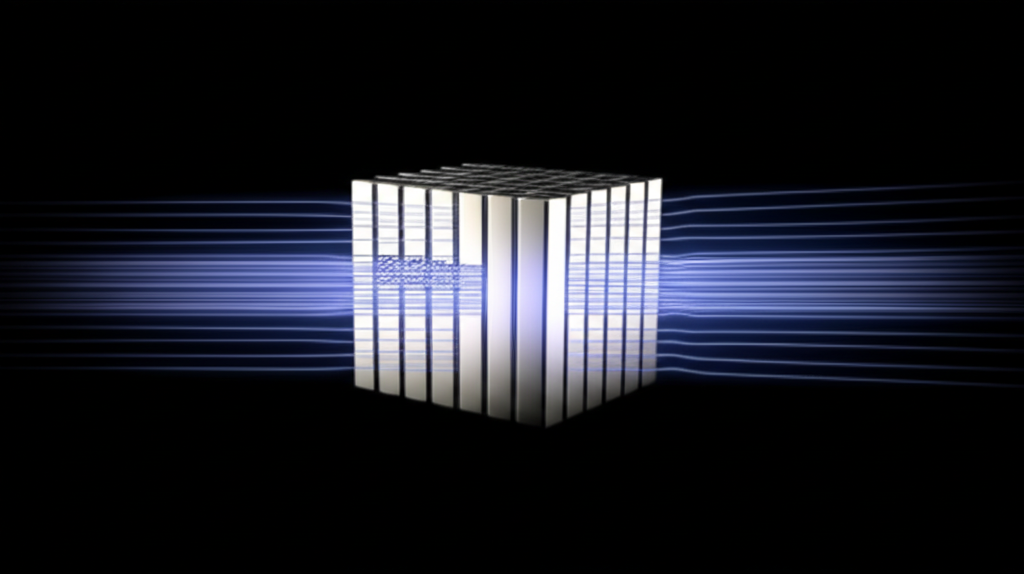
Once a magnet is made, it creates an invisible area of influence around it called a magnetic field. You can’t see it, but you can see what it does. We imagine this field using magnetic field lines. These are imaginary lines that flow out of the North Pole of a magnet and loop around to enter the South Pole. Where the lines are closest together, the magnetic force is strongest. The total number of lines is called the magnetic flux, and how dense they are is the magnetic flux density. We measure the strength of these fields in units called Gauss or Tesla.
So, how do magnets attract and repel? It’s all about how their field lines interact. When you bring the North Pole of one magnet near the South Pole of another, their field lines link up. The lines flow out of the North Pole and straight into the nearby South Pole. This connection pulls the magnets together. But if you try to push two North Poles together, their field lines push against each other. They can’t cross, so they bend away, creating a force that shoves the magnets apart. This fundamental rule—opposites attract and likes repel—governs all magnetic interactions.
Can a Permanent Magnet Lose Its Power?
Even though they are called “permanent,” these magnets can lose their magnetism. This is known as the demagnetization process. A permanent magnet is a delicate balance of aligned domains. If you disrupt that alignment, the magnet gets weaker. This is a big problem if a magnet is a critical part of a machine, as a loss of power could cause total failure. Understanding what causes this helps you protect your magnets.
There are three main enemies of a permanent magnet. The biggest one is heat. Every magnet has a critical temperature called the Curie Temperature. If you heat a magnet above this point, the atoms vibrate so violently that the magnetic domains are completely scrambled. The alignment is lost, and the magnetism is gone for good. The second enemy is a strong opposing magnetic field. If a magnet is exposed to a magnetic field pointing in the opposite direction, it can be strong enough to flip the domains back to a random state. Finally, physical shock, like dropping a magnet or hitting it with a hammer, can provide enough energy to knock some of the domains out of alignment, making the magnet weaker over time.
Where Do We Use Permanent Magnets Every Day?
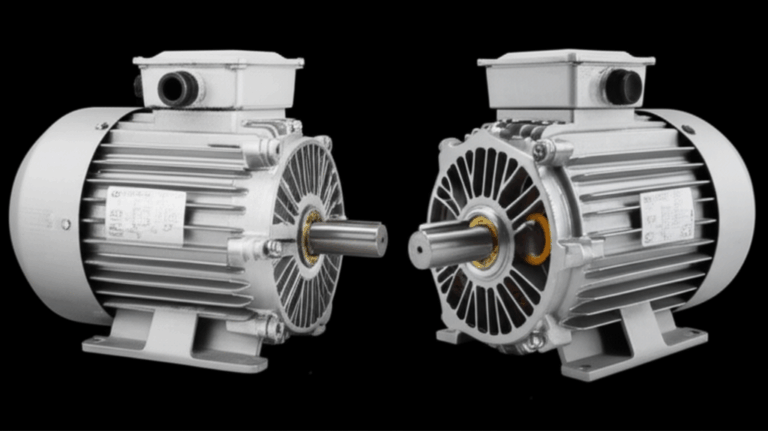
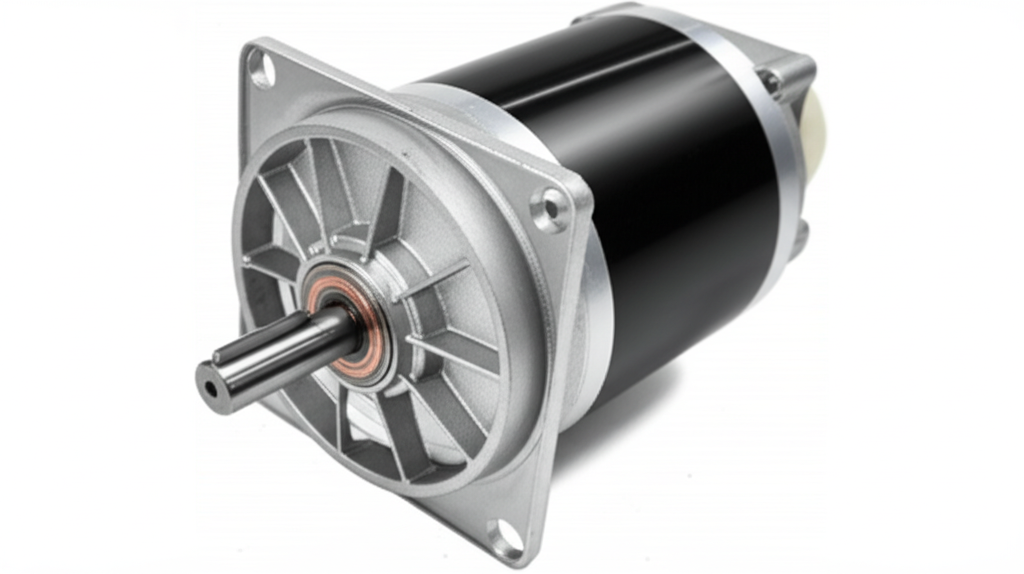
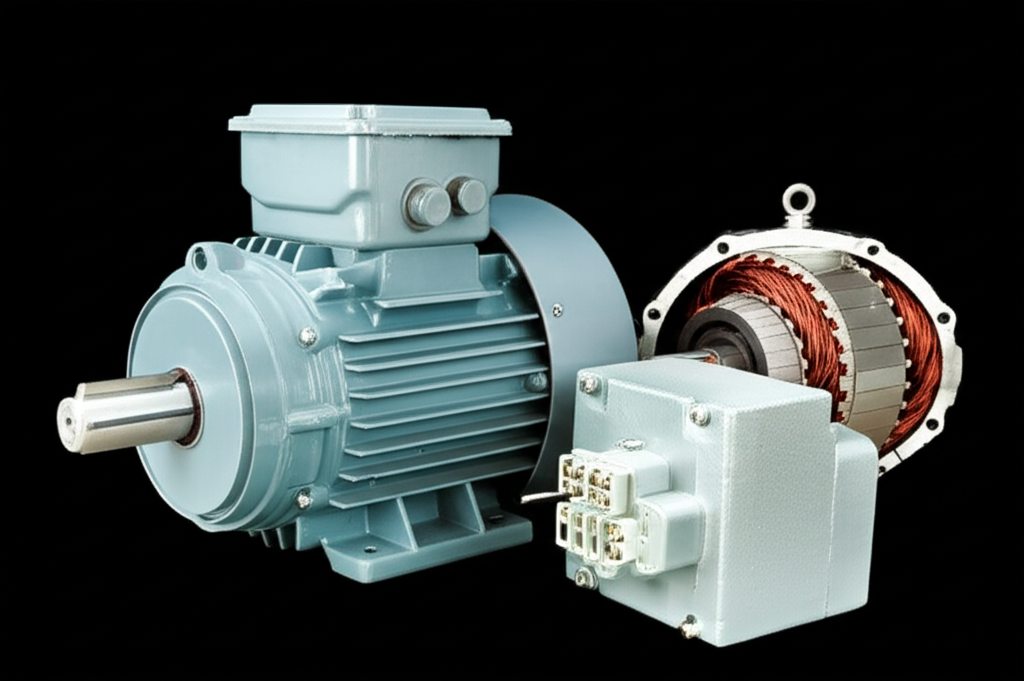
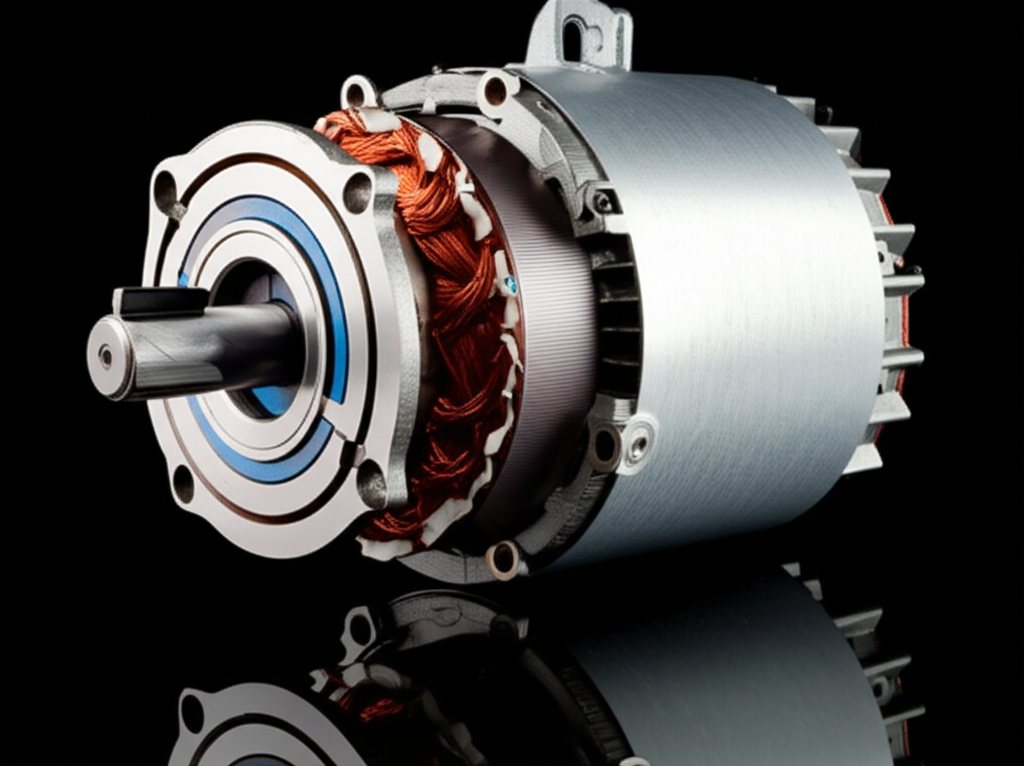
You might be surprised by how many things around you rely on permanent magnets. They are the unsung heroes of modern technology. One of the biggest uses is in electric motors. In a motor, permanent magnets create a stable magnetic field that pushes against the magnetic field of an electromagnet. This constant push and pull creates the rotation that powers everything from electric vehicle wheels to your blender. The interaction between the stationary part, the stator and rotor, is what creates this motion.
Magnets are also essential for sound. How do speakers use magnets? A permanent magnet in a speaker creates a field around a coil of wire attached to a cone. As electrical signals from your music flow through the coil, it becomes an electromagnet that is rapidly pushed and pulled by the permanent magnet. This vibration makes the cone move, creating the sound waves you hear. Other applications include magnetic data storage in computer hard drives, magnetic levitation for high-speed trains, powerful MRI magnet technology in hospitals, and even simple Hall effect sensors that detect magnetic fields in your car.
How Are Permanent Magnets Different from Electromagnets?
While permanent magnets have their own built-in, persistent field, an electromagnet is different. It’s a temporary magnet made by passing an electric current through a coil of wire, which is often wrapped around a soft iron core. When the electricity is on, it’s a magnet. When you turn the electricity off, the magnetism disappears. This is explained by physical laws like Ampere’s law.
The key difference is control. You can’t turn a permanent magnet off. Its field is always there. An electromagnet can be turned on and off in an instant, and you can even make it stronger or weaker by changing the amount of electricity. This makes them perfect for jobs that require a changing magnetic force, like lifting and dropping scrap metal in a junkyard or creating the changing fields in transformers. In fact, the special core inside a transformer is made of soft magnetic material, often in the form of a transformer lamination core, designed to magnetize and demagnetize easily to reduce energy loss. This makes the electromagnet vs permanent magnet choice entirely dependent on the job at hand.
Is Magnetism Bigger Than Just My Fridge?
Magnetism is a fundamental force of the universe, and it’s much bigger than our everyday gadgets. Our entire planet is a giant magnet! The swirling liquid iron in the Earth’s core creates the Earth’s magnetic field. This field, studied in a science called Geomagnetism, protects us from harmful solar radiation from solar flares and creates the beautiful aurora borealis at the poles. It’s also what makes a magnetic compass point north.
Scientists study magnetism in many advanced fields. Spintronics is a field of technology that aims to use electron spin, not just its charge, to create faster and more efficient electronics. Researchers explore phenomena like Giant Magnetoresistance (GMR) to build incredibly sensitive magnetic sensors. In space, scientists study Magnetohydrodynamics (MHD), which looks at how magnetic fields interact with superheated gases called plasma in stars and galaxies. Even in medicine, beyond MRI, a technique called NMR spectroscopy uses magnetic principles to study the structure of molecules. From superconductors that can levitate over magnets due to the Meissner effect to the futuristic idea of magnetic refrigeration, magnetism is a deep and amazing part of our universe.
Key Things to Remember
- Magnetism starts with the spin of electrons in atoms.
- In ferromagnetic materials like iron, tiny magnetic regions called domains can be aligned to create a powerful magnetic field.
- A permanent magnet is made from a “hard” magnetic material that can keep its domains aligned after the magnetizing field is removed.
- All magnets have a North and South Pole, and their invisible magnetic field lines explain the forces of attraction and repulsion.
- Heat, strong opposing fields, or physical shocks can weaken or destroy a permanent magnet.
- Magnets are essential for countless technologies, especially electric motors, where quality components like precision motor core laminations are vital for performance. Understanding how magnets work is the first step to understanding our modern world. At Sino Lamination, we specialize in manufacturing the highest quality core lamination stacks that form the heart of these powerful machines.