How Long Does It Take to Change a Starter Motor? (DIY vs. Professional Estimates)
You turn the key, and instead of the familiar roar of your engine, you get a single, disheartening click. Or maybe it’s a series of clicks, a slow, groaning crank, or even a grinding noise. Whatever the symptom, your day has just come to a screeching halt. If you’ve traced the issue to a failed starter motor, one big question immediately pops into your head: “How long is this going to take to fix?”
It’s a critical question because the answer directly impacts your wallet and your schedule. Are you looking at a quick one-hour fix or an all-day affair that leaves you without a car?
The short answer is: a professional mechanic can typically replace a starter motor in 1 to 3 hours. For a DIYer, the job can take anywhere from 2 to 6 hours, or even longer, depending on your vehicle and experience.
But that’s just a ballpark estimate. The reality is, the time it takes can swing wildly based on a few key factors. This guide will break down everything you need to know, from professional labor times and DIY challenges to the hidden variables that can turn a simple job into a weekend project. We’ll give you the insights to budget your time and money, so you can decide whether to grab your tools or your phone to call a pro.
What We’ll Cover
- Average Time Estimates for Starter Motor Replacement: We’ll compare the time it takes for a seasoned mechanic versus a home DIY enthusiast.
- Key Factors Affecting Starter Motor Replacement Time: Discover why your car’s make and model can mean the difference between an easy and a frustrating repair.
- A Step-by-Step Overview of the Job: A quick look at the process to help you understand what’s involved.
- Cost Implications: Beyond Just Time: How labor hours, parts, and unexpected issues translate into the final bill.
- When to DIY vs. When to Call a Professional: A practical guide to help you make the smart choice for your situation.
Average Time Estimates for Starter Motor Replacement
Let’s get straight to the numbers. The time it takes to swap out a starter motor isn’t a one-size-fits-all figure. It largely depends on who’s doing the work and their level of expertise.
Professional Mechanic Time: Efficiency and Expertise
For a certified auto technician working in a professional shop, replacing a starter is often a routine job. They have the benefit of hydraulic lifts, specialized tools, and years of experience.
- Typical Labor Hours: Most repair shops will quote between 1 and 3 hours of labor for a starter replacement. This is based on industry-standard labor guides that estimate the time for a given job on a specific vehicle.
- What’s Included: This time estimate usually covers everything from the initial diagnosis to confirm the starter is the culprit, disconnecting the battery, removing the old unit, installing the new one, and performing a final test to ensure everything works perfectly.
For example, on a car with an easily accessible starter, the book time might be just 1.2 hours. However, on a vehicle where the starter is buried deep in the engine bay, the estimate could jump to 3.5 hours or more. The mechanic’s familiarity with your specific make and model also plays a huge role in their efficiency.
DIY (Do-It-Yourself) Time: The Home Garage Reality
If you’re thinking about tackling this job yourself to save on labor costs, your time investment will likely be longer. This is perfectly normal and depends heavily on your comfort level with turning a wrench.
- Experienced DIYer: If you’re comfortable working on cars and have a good set of tools (including jack stands and a decent socket set), you can often complete the job in 1 to 3 hours. This puts you nearly on par with a professional, though you might spend a little extra time double-checking steps.
- Beginner/First-Timer: If this is one of your first major car repairs, it’s wise to set aside a good chunk of your day. Expect the job to take anywhere from 2 to 6 hours. This extra time accounts for looking up instructions, locating the starter, dealing with tricky bolts, and the general learning curve. Don’t rush it—safety and doing the job right are more important than speed.
The biggest variable for a DIYer isn’t just skill; it’s being prepared for the unexpected. A single rusted bolt can add an hour of frustration to your day, something a pro with an impact wrench and a blowtorch can often overcome in minutes.
Key Factors Affecting Starter Motor Replacement Time
So, why does the time vary so much? It all comes down to a handful of critical factors. The difference between a 60-minute swap and a 6-hour ordeal is usually found in one of these areas.
1. Vehicle Make and Model: The Accessibility Lottery
This is, without a doubt, the single biggest factor. The location of the starter motor is determined by the engineers who designed your car, and some are far more forgiving than others.
- Easy Access: On some vehicles, particularly older trucks and cars with V8 engines in a rear-wheel-drive layout, the starter is right there on the side of the engine block. You can see it and reach it with basic tools after safely lifting the vehicle. These are the dream scenarios—a few bolts, a couple of wires, and you’re done.
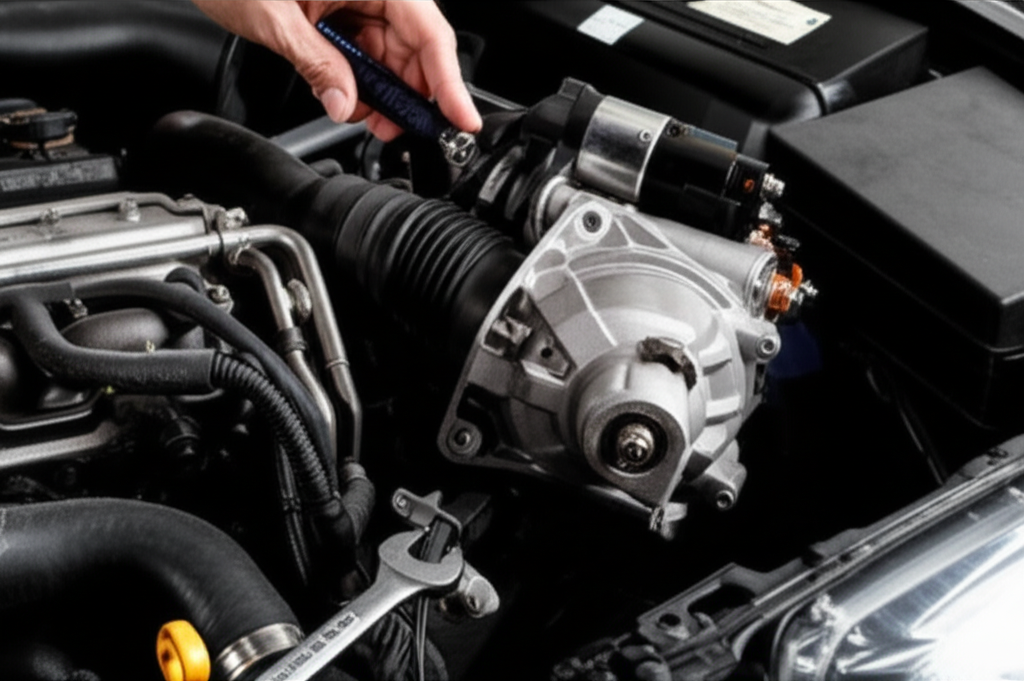
- Difficult Access: On many modern vehicles, especially those with transverse-mounted (sideways) V6 engines or packed engine bays, the starter can feel like it’s buried in a fortress. It might be tucked under the intake manifold, hidden behind an exhaust pipe, or crammed between the engine and the firewall. In these cases, a significant number of other components—like the air filter box, exhaust manifolds, or even an axle shaft—may need to be removed just to get to the starter. This is what turns a one-hour job into a multi-hour project.
A classic example is comparing an old Chevrolet truck, where the starter is easily accessible from underneath, to a front-wheel-drive minivan, where a mechanic might have to remove the intake manifold from the top of the engine to reach it.
2. Corrosion and Rusted Bolts: The Enemy of Speed
If you live in an area with snow, salt, or high humidity, rust is your nemesis.
- Rusted Bolts: Bolts securing the starter or nearby components (like exhaust flanges) can become seized with rust. Trying to force them can lead to a stripped or snapped bolt head, which is a major setback. What should have taken 30 seconds with a ratchet can now involve hours of drilling, heating, and using special bolt-extractor tools.
- Corroded Electrical Connections: The wires connecting to the starter solenoid can also become corroded. This not only causes starting problems but can make the nuts difficult to remove without breaking the terminal posts on the starter or solenoid. Cleaning these connections properly adds extra time to the job.
3. Tools and Equipment: The Right Gear for the Job
Having the right tools makes an enormous difference.
- Professional Setup: A mechanic’s shop is equipped with hydraulic lifts, a vast array of wrenches, sockets, extensions, swivels, and air-powered or electric impact guns. This arsenal allows them to access and remove stubborn bolts quickly and safely.
- DIY Setup: At home, you’re likely working with a floor jack and jack stands. While perfectly safe when used correctly, this setup offers less room to maneuver than a lift. Not having the right combination of socket extensions and swivels to reach a bolt hidden at a weird angle can be a major source of delay.
4. Unexpected Complications: The “While You’re In There” Problems
Sometimes, you uncover other issues during the repair.
- Broken Wires: Old, brittle wiring can crack or break when you move it to access the starter.
- Damaged Flywheel Teeth: When you remove the old starter, you might inspect the flywheel’s ring gear and find that some teeth are chewed up or missing. This is a much bigger problem and indicates the starter wasn’t engaging properly. While the starter itself is a manageable fix, a damaged flywheel is a major repair that often requires removing the entire transmission.
- Discovering Other Leaks or Failures: You might notice an oil or coolant leak from a nearby component that needs addressing. It’s a classic case of “while I’m in here, I might as well…” which can expand the scope and time of your project. This is a common part of dealing with a motor problem; one issue can often reveal another.
A Step-by-Step Overview of Starter Motor Replacement
To understand why the time can vary, it helps to know the basic steps involved. While every car is different, the fundamental process is generally the same.
Each of these steps can be quick or time-consuming depending on the factors we’ve already discussed.
Cost Implications: How Time Translates to Money
When you take your car to a shop, time is literally money. The final bill is a combination of parts and labor, and the labor portion is directly calculated from the time it takes to do the job.
- Labor Costs: Auto repair shops have an hourly labor rate, which can range from $100 to over $200 depending on your location and whether you’re at a dealership or an independent shop. If a starter replacement is quoted at 2.5 hours and the shop rate is $150/hour, you’re looking at $375 in labor alone.
- Parts Costs: The starter motor itself can vary in price.
- Remanufactured (Aftermarket): $80 – $250. These are rebuilt units that are a cost-effective and reliable option.
- New (Aftermarket): $100 – $350. A brand new part from a third-party manufacturer.
- New (OEM): $200 – $600+. OEM stands for Original Equipment Manufacturer, and these are the same parts the car was built with. They are the most expensive but guarantee a perfect fit.
The total cost for a professional starter replacement typically falls between $250 and $800, but for luxury vehicles or those with difficult-to-access starters, it can easily exceed $1,000.
When to DIY vs. When to Call a Professional
Now for the big decision: should you tackle this yourself or leave it to the pros?
Go for the DIY Route If:
- You Have the Right Tools and a Safe Space: You’ll need a good socket and wrench set, a floor jack, and sturdy jack stands at a minimum.
- The Starter is Relatively Easy to Access: A quick search on YouTube or a forum for your specific vehicle can reveal if you’ve won the “accessibility lottery.” If it’s right there, it’s a great DIY project.
- You Have the Time and Patience: Be prepared for it to take longer than you think. If you need your car for work on Monday morning, starting the job on Sunday afternoon might not be the best idea.
- You’re Confident in Your Abilities: If you enjoy working on your car and have some experience, a starter replacement is a very rewarding project. Understanding the basic motor principle of how it cranks the engine can make the process even more interesting.
Call a Professional If:
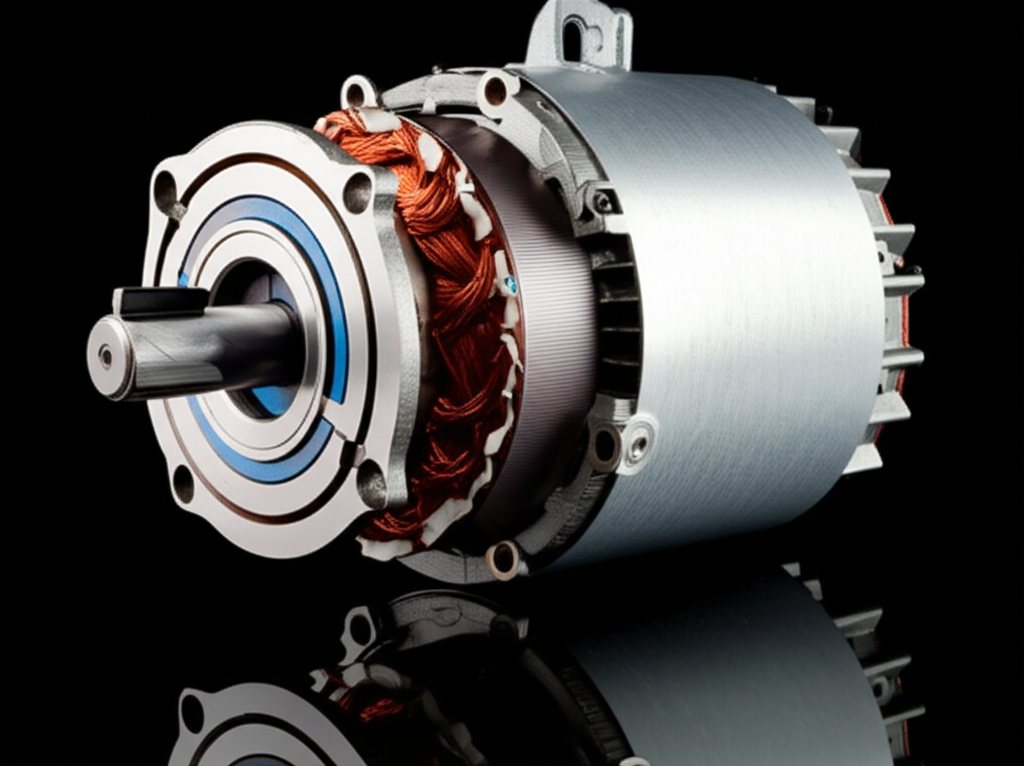
- The Starter is Buried: If tutorials show you need to remove the intake manifold or other major components, the job’s complexity increases exponentially. This is especially true for modern engines where complex systems like the stator and rotor are part of a larger, integrated design.
- You Lack the Tools or a Safe Place to Work: Working under a car can be dangerous without the proper equipment and precautions. It’s not worth the risk.
- The Vehicle is Heavily Rusted: If you see significant rust on the undercarriage, you’re likely to run into seized bolts. A professional shop has the tools and experience to handle these without causing more damage.
- You Need a Guarantee: A repair shop will stand by their work with a warranty on both the part and their labor. If the new starter fails prematurely, they’ll replace it. If you do it yourself, you’re on your own.
Your Takeaway: Plan for the Possibilities
So, how long does it take to change a starter motor? It depends.
- Best-Case Scenario: For an experienced person with the right tools working on a car with an easily accessible starter, it can be a quick 1-2 hour job.
- Average Scenario: For most common cars, a professional will take 2-3 hours, while a capable DIYer should budget 3-5 hours.
- Worst-Case Scenario: On a complex vehicle with a buried starter and rusted bolts, the job can take a professional 4-8 hours and could consume an entire weekend for a DIYer.
The key is to do your homework. A little bit of research on your specific vehicle will tell you what you’re up against. By understanding the potential challenges, you can make an informed decision, whether that means confidently setting aside a Saturday to do it yourself or handing the keys to a trusted mechanic, knowing exactly what the job entails. Either way, you’ll be one step closer to hearing that sweet sound of your engine turning over, ready to hit the road again.