How Long Is Bristol Motor Speedway? Unveiling the “World’s Fastest Half-Mile”
If you’ve ever watched a NASCAR race at Bristol Motor Speedway, you’ve heard the commentators call it the “World’s Fastest Half-Mile.” It’s a name that perfectly captures the blistering speeds and gladiator-style combat that unfold inside this concrete colosseum. But have you ever stopped to wonder if that famous nickname is technically accurate? How long is the track, really?
You’re in the right place. The answer is a bit more interesting than a simple number. Understanding the true length of Bristol involves a dive into its history, its unique design, and how a few hundred extra feet of asphalt—now concrete—created a legend. We’ll break down not just the official measurement but also the key dimensions that make Bristol one of the most challenging and beloved tracks on the NASCAR circuit.
What We’ll Cover
- The Official Length of Bristol Motor Speedway’s Oval Track
- Key Dimensions and Features of the Concrete Jungle
- Bristol’s Temporary Dirt Track Configuration
- Beyond the Oval: Bristol Dragway’s Length
- Historical Evolution of Bristol Motor Speedway’s Length and Design
- Why Bristol’s Length Matters: Impact on Racing
- Frequently Asked Questions About Bristol Motor Speedway’s Dimensions
The Official Length of Bristol Motor Speedway’s Oval Track
Let’s get straight to the point. The official length of Bristol Motor Speedway’s oval track is 0.533 miles (or 2,814.24 feet).
Wait a second. That’s not a half-mile. So, what gives?
This is where history and marketing collide beautifully. When the track was built back in 1961, it was designed and constructed to be as close to a perfect half-mile as possible. For decades, it was simply known as a half-mile track. The nickname “The World’s Fastest Half-Mile” was a brilliant piece of branding that stuck because it felt right. The racing is so intense and the laps are so quick (around 15 seconds for a Cup Series car) that it feels like the most supercharged half-mile on the planet.
Over time, as measurement technology became more precise and sanctioning bodies like NASCAR required exact figures, the official length was recorded as 0.533 miles. But nobody was about to abandon a nickname that had become legendary. So, while engineers and officials use the 0.533-mile figure for calculations, everyone from fans to drivers still affectionately calls it a half-mile. It’s a nod to its heritage and a testament to the track’s larger-than-life character.
Key Dimensions and Features of the Concrete Jungle
The length is just one piece of the puzzle. What truly defines Bristol is the combination of its short distance with other extreme features. It’s a design that forces chaos and rewards precision.
Banking that Defies Gravity
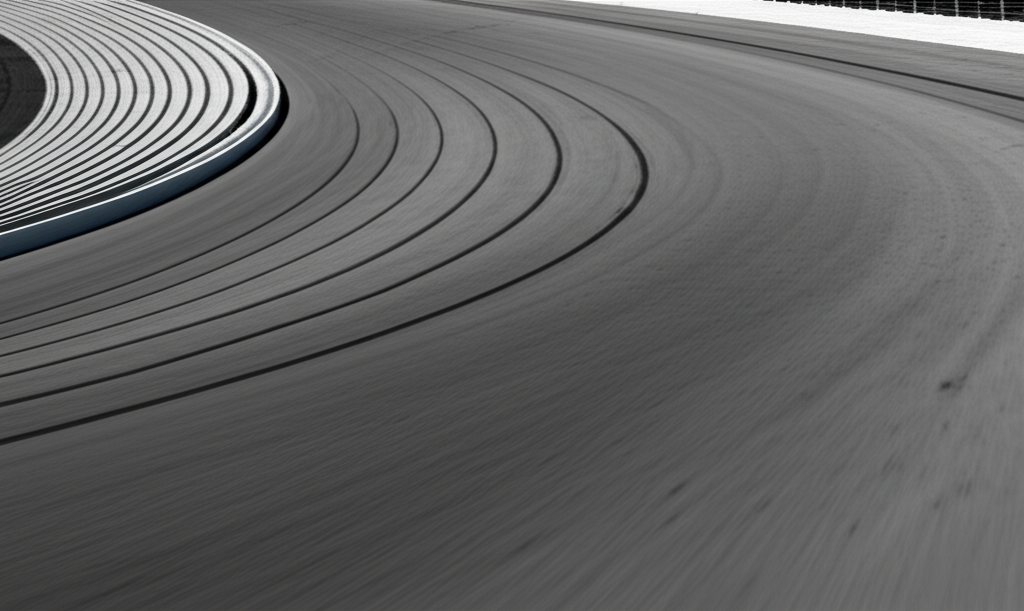
The most startling feature of Bristol is its incredibly steep banking. If you’ve ever had the chance to walk on the track, it feels like trying to scale a wall.
- Turns: The corners feature progressive banking that ranges from 24 to 28 degrees.
- Straights: Even the frontstretch and backstretch are banked, tilting from 5 to 9 degrees.
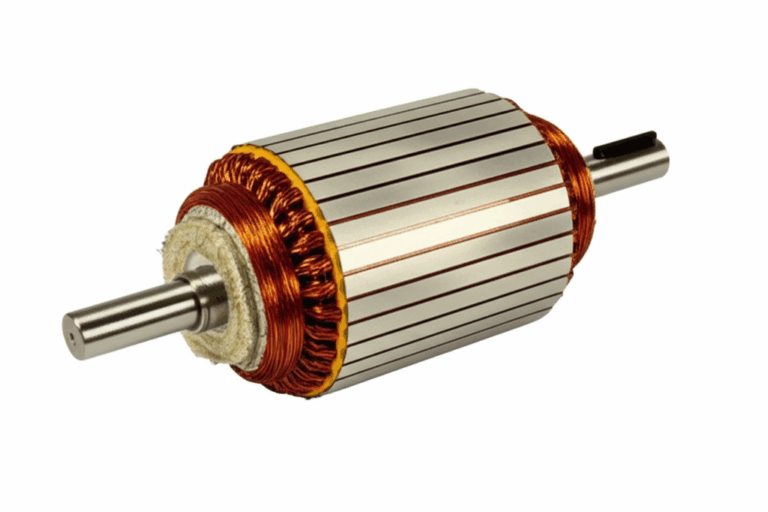
To put that in perspective, a steep public road might have a 6-degree grade. The banking at Bristol allows drivers to carry tremendous speed through the tight turns, essentially pinning their cars to the track through G-force. This banking is what transforms a short, tight oval into a high-speed pressure cooker. This incredible banking acts as a guiding force, a physical structure designed for pure performance, much like how a specialized bldc stator core is meticulously shaped to optimize magnetic fields in a high-performance brushless motor.
The Unforgiving Concrete Surface
Originally an asphalt track, Bristol was repaved with concrete in 1992. This decision fundamentally changed the racing. Concrete doesn’t wear like asphalt; it doesn’t build up rubber in the same way. It offers high grip but can also be punishing on tires, and the racing grooves can be less forgiving. This surface, combined with the track’s bowl shape, earned it another nickname: “The Concrete Jungle.” The durability and rigidity of this surface are paramount, built from layers of material meticulously prepared for extreme stress—a concept familiar in engineering where the performance of advanced components relies on the quality of their electrical steel laminations.
A Track Width Built for Action
Bristol Motor Speedway is approximately 40 feet wide all the way around. While that might sound like plenty of space, when you have 40 stock cars roaring around at over 120 mph, it gets crowded in a hurry. This narrowness is a key ingredient in the Bristol recipe. There’s very little room for error, and drivers are often forced to trade paint to make a pass. The tight quarters ensure that no one can run away and hide, leading to the bumper-to-bumper action and frayed tempers that fans have come to love.
The Colosseum’s Four Corners
The track is a true oval with four distinct, tight turns. Unlike tracks with long straightaways, Bristol’s frontstretch and backstretch are both just 650 feet long. This means drivers are almost constantly turning. As soon as they exit Turn 2, they’re setting up for Turn 3. This relentless rhythm requires immense concentration and physical stamina, testing both driver and machine to their absolute limits.
Bristol’s Temporary Dirt Track Configuration
In a bold move that shook up the NASCAR world, Bristol Motor Speedway began temporarily converting its concrete surface into a dirt track for a special Cup Series race weekend starting in 2021. This monumental undertaking involves hauling in over 23,000 cubic yards of dirt to cover the famous concrete oval.
When covered in dirt, the track’s fundamental length remains 0.533 miles. However, the entire geometry and racing dynamic changes. The banking is often reshaped to be steeper (around 19 degrees) to create better lanes for dirt racing, and the surface becomes slick and ever-changing. This transformation turns the high-speed, high-grip concrete oval into a masterclass of car control, where drivers slide their cars sideways in a completely different style of racing.
Beyond the Oval: Bristol Dragway’s Length
Nestled right next to the iconic oval is another legendary racing venue: Bristol Dragway. This facility is a world-renowned drag strip, sanctioned by the NHRA (National Hot Rod Association).
The length of Bristol Dragway’s strip is the standard for top-tier drag racing: a quarter-mile (0.25 miles).
Known affectionately as “Thunder Valley” due to the way the sound of 11,000-horsepower engines echoes off the surrounding mountains, it’s one of the most picturesque and popular stops on the NHRA tour. It’s a completely different discipline of motorsport, focused on pure, straight-line acceleration over a short distance, but it shares the same high-octane spirit as its oval counterpart.
Historical Evolution of Bristol Motor Speedway’s Length and Design
Bristol Motor Speedway didn’t become the “Last Great Colosseum” overnight. Its evolution is a story of ambitious vision and continuous refinement.
When it first opened on July 30, 1961, the track was an asphalt oval with much more modest banking of around 22 degrees in the turns. It was fast for its time but lacked the fortress-like grandstands and extreme features it’s known for today.
The first major transformation came in 1992 when the track was repaved with its signature concrete surface. This was a game-changer, altering everything from tire strategy to the feel of the track itself.
Throughout the 2000s, Speedway Motorsports, Inc. (SMI) undertook massive expansion projects, enclosing the track in enormous grandstands that now hold approximately 146,000 fans. This is what created the stadium-like atmosphere, amplifying the noise and creating an intimidating bowl for drivers to compete in.
The track’s surface and banking were also reconfigured in 2007 and again in 2012 to introduce variable, progressive banking, an attempt to create multiple racing grooves. Each change, however subtle, has had a profound impact on the racing, showing how even small adjustments to a track’s dimensions can dramatically alter the competition. The constant evolution of the track to enhance performance reflects a core engineering concept; understanding the fundamental motor principle of how components interact is key to improvement, whether it’s in a race car or an electric motor.
Why Bristol’s Length Matters: Impact on Racing
So, why do we care so much about 0.533 miles? Because that specific length, when combined with the extreme banking and narrow width, creates a style of racing found nowhere else.
Blistering Speeds and Close-Quarters Combat
The short length means laps fly by in a flash. A typical NASCAR Cup Series lap takes only about 14-16 seconds. This rapid pace keeps drivers on edge and the action continuous. The high banking allows cars to maintain incredible momentum, resulting in average speeds that are mind-boggling for a track so small. Tony Stewart holds the qualifying record at an astonishing 129.535 mph, set back in 2005. This combination of speed and confinement is what leads to the inevitable contact and spectacular, full-field battles.
The Rhythmic Dance of Stator and Rotor
You can think of the dynamic at Bristol as an elegant, if brutal, mechanical system. The track—a static but powerful colosseum—acts much like a motor’s stator; it creates the field of play and dictates the forces at work. The cars, like powerful rotors, react to the forces the track imposes on them, spinning around the fixed circuit at incredible speeds. This thrilling interaction between the stationary track and the moving cars, a perfect dance between the stator and rotor, is what generates the electrifying spectacle fans come to see.
Lap Times, Records, and Strategy
The short track length completely upends normal racing strategy. There is no time to relax. A small mistake can put a driver a lap down in the blink of an eye. Pit strategy is critical, as track position is king. It’s incredibly difficult to pass, so teams must be flawless on pit road to gain spots. The constant traffic means drivers are always battling, weaving, and defending their position. It’s less like a chess match on a superspeedway and more like a 500-lap knife fight in a phone booth.
Bristol Motor Speedway Track Dimensions & Key Statistics
| Feature/Metric | Value | Notes & Context |
|---|---|---|
| Official Oval Track Length | 0.533 miles (0.858 km) | Often referred to informally as a “half-mile” due to its original approximate length. |
| Informal Oval Track Length | 0.5 miles | Common reference, especially in historical contexts and fan discussions. |
| Bristol Dragway Length | 0.25 miles (0.402 km) | NHRA-sanctioned quarter-mile drag strip, known as “Thunder Valley.” |
| Banking in Turns (Oval) | 24 to 28 degrees (progressive) | Exceptionally steep, contributing to high speeds and “bowl” effect. |
| Banking on Straights (Oval) | 5 to 9 degrees | Less banking than turns, but still significant. |
| Track Width (Oval) | Approx. 40 feet | Narrow width contributes to congestion and contact during races. |
| Track Surface (Oval) | Concrete (since July 1992) | Originally asphalt from 1961-1992. Concrete changed racing dynamics. |
| Temporary Dirt Configuration | Maintained 0.533-mile measurement | Implemented for specific NASCAR Cup Series races (e.g., 2021-2024). |
| Seating Capacity | Approx. 146,000 | One of the largest sports venues in the world by seating capacity. |
| Frontstretch Length | Approx. 650 feet | Relatively short, leading to immediate turn entry. |
| Backstretch Length | Approx. 650 feet | Also short, keeping cars constantly in or preparing for turns. |
| First Race (Oval) | July 30, 1961 | First NASCAR Grand National (now Cup Series) race. |
| Record Speed (Cup Qualifying) | 129.535 mph (Tony Stewart, 2005) | Achieved on the concrete surface. Reflects the incredible speeds despite short length. |
| Typical Cup Series Lap Time | ~14-16 seconds | Varies based on conditions, but indicates the rapid pace of racing. |
Frequently Asked Questions About Bristol Motor Speedway’s Dimensions
Q: Is Bristol Motor Speedway a true half-mile?
A: No, not exactly. Its official, precisely measured length is 0.533 miles. It’s called a half-mile due to its original design goal and a long history of being referred to as such. The nickname “World’s Fastest Half-Mile” has become an iconic part of its identity.
Q: What is the banking at Bristol?
A: The banking is progressive, meaning it gets steeper the higher up the track you go. In the turns, it ranges from 24 to 28 degrees. The frontstretch and backstretch are also banked between 5 and 9 degrees.
Q: How wide is the track at Bristol?
A: The track is approximately 40 feet wide, which is quite narrow for high-level stock car racing. This contributes to the close-quarters, bumper-to-bumper action the track is famous for.
Q: How long is Bristol Dragway?
A: Bristol Dragway, also known as Thunder Valley, is a standard quarter-mile (0.25 miles) drag strip.
Q: When did Bristol get a concrete surface?
A: The track was repaved from asphalt to concrete in the summer of 1992. The first race on the new concrete surface was the Budweiser 500 in August 1992.