How to Build a Super-Powered Magnet: A Fun Guide to Magnetic Circuit Design
Ever wondered how the tiny magnet in a speaker can make such a big sound? Or how giant cranes in a junkyard can lift entire cars with what looks like just a big metal plate? It’s not magic, it’s science! Specifically, it’s the science of magnetic circuit design. This might sound complicated, but it’s really just about being clever with magnets. In this guide, I’m going to show you the secrets that engineers use to control the invisible power of magnetism. You’ll learn how to make magnets stronger, more focused, and more efficient without just getting a bigger one. It’s a bit like being a magnet superhero, and by the end of this, you’ll know their secrets!
Table of Contents
- What in the World is a Magnetic Circuit?
- Why Can’t You Just Use a Bigger Magnet?
- How Do You Tell a Magnetic Field Where to Go?
- What is a Halbach Array (and Why is it a Magnetic Superhero)?
- Can You Really Make a Magnet Stronger with Plain Old Metal?
- So, How Do These “Flux Concentrators” Actually Work?
- Where Do We See These Super-Magnets in Real Life?
- How Do Clever Magnetic Designs Make Motors Spin?
- What Happens When a Magnetic Circuit Goes Wrong?
- How Can You Start Designing Your Own Magnetic Circuit?
- Your Magnetic Masterplan
What in the World is a Magnetic Circuit?
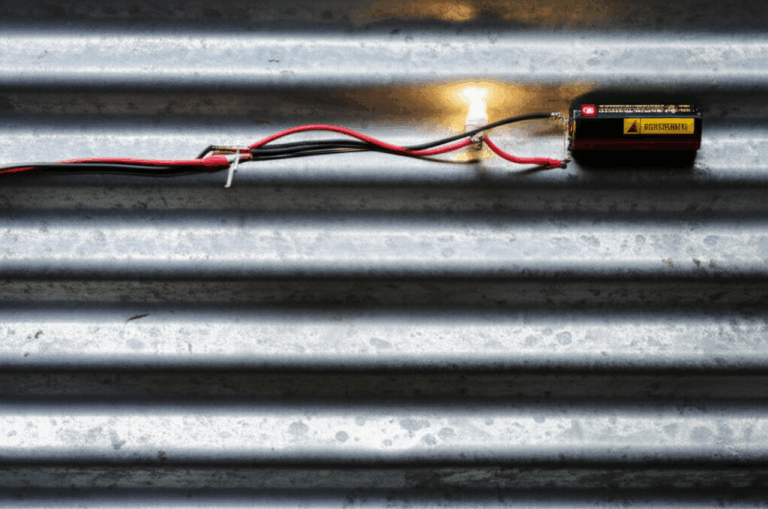
Okay, let’s start with the basics. You’ve probably heard of an electrical circuit. You have a battery, some wires, and a lightbulb. The electricity flows from the battery, through the wires, to the lightbulb, and back again. It follows a specific path, or a “circuit.”
A magnetic circuit is pretty much the same idea, but for magnetism! Every magnet has an invisible force field around it. You can’t see it, but you can feel it when you try to push two magnets together or when you pick up a paperclip. This field is made of something we call “magnetic flux.” You can think of flux as the invisible energy that does all the work.
A magnetic circuit is just the path that this magnetic flux takes. It flows out of the magnet’s north pole, travels through the air (or other materials), and goes back into the south pole. A simple bar magnet sitting on your desk has a magnetic circuit. The flux leaves the north pole, loops around through the air, and enters the south pole. The air is part of the circuit! The goal of a good designer is to create a better, easier path for that flux to follow.
Why Can’t You Just Use a Bigger Magnet?
This is a great question. If you want more magnetic power, why not just get a giant magnet? Well, sometimes that’s a good solution, but often it’s a terrible one. Think about the smartphone in your pocket. It has tiny speakers that use magnets to make sound. Could you fit a giant, heavy magnet in there? Of course not! It would be ridiculously big and heavy.
That’s the first problem: size and weight. In many things we build, from headphones to satellites, we need things to be as small and light as possible. Using a massive magnet is just not an option.
The second problem is cost. The materials that make strong magnets, like neodymium, can be expensive. If you can get the same amount of power from a smaller magnet by being clever, you can save a lot of money. It’s like getting a sports car’s performance out of a regular car’s engine just by tuning it perfectly.
Finally, a big magnet can be messy. Its magnetic field spreads out everywhere. This can cause problems by sticking to things you don’t want it to, or even messing up sensitive electronics nearby. Good magnetic circuit design helps you put the magnetic force exactly where you want it and only where you want it.
How Do You Tell a Magnetic Field Where to Go?
So, if you can’t just use a bigger magnet, how do you control the one you have? The secret is to give the magnetic flux a path it likes to travel through.
Imagine you have to get from one side of a field to the other. You could trudge through the tall, muddy grass, or you could walk on a nice, smooth paved sidewalk. Which one would you choose? The sidewalk, right? It’s the path of least resistance.
Magnetic flux is the same way. It can travel through air, but it finds it difficult. It’s like walking through mud. But if you give it a material like iron or a special type of steel, it’s like a superhighway for the flux. The flux will pour into the iron and follow it wherever it goes. These materials are called ferromagnetic materials. By placing pieces of iron or steel around our magnet, we can create a “sidewalk” for the flux, guiding it precisely to the spot where we need the magnetic force to be the strongest. This is the first and most important trick in a magnet designer’s toolbox.
What is a Halbach Array (and Why is it a Magnetic Superhero)?
Now for a really cool trick. What if I told you that you could take a handful of small, ordinary magnets and arrange them in a way that makes them super-powered on one side and almost completely dead on the other? It sounds like something from a comic book, but it’s real! It’s called a Halbach array.
Imagine you have five square magnets. If you just line them up with all the north poles facing up, you get a magnetic field on both the top and the bottom. But in a Halbach array, you arrange them in a special rotating pattern. The first magnet points up, the next points left, the next points down, the next points right, and then the pattern repeats.
When you do this, something amazing happens. The magnetic fields of the individual magnets start to work together on one side, adding up to create a super-strong, concentrated field. On the other side, they cancel each other out, leaving almost no magnetic field at all! I’ve seen tests where a well-made Halbach array creates a magnetic field that is 1.4 times stronger on its working side compared to a normal magnet using the exact same amount of material. This is why it’s a magnetic superhero—it gives you more power for free, just by being smart about the arrangement. You see this technology in high-tech places like high-speed “maglev” trains and advanced electric motors.
Can You Really Make a Magnet Stronger with Plain Old Metal?
Yes, you absolutely can! This is one of the most common and powerful techniques in magnetic design. Let’s say you have a magnet and you want to use it to lift a steel bolt. You bring the magnet close, and it picks it up. But what if you need it to be just a little bit stronger?
You’re facing a classic problem: your magnet’s power is spread out over its whole surface. You only need the power at the very tip that touches the bolt. The rest is just wasted. This is where you bring in a simple piece of iron or steel, which we call a flux concentrator or a pole piece.
Think of it like this. Imagine you’re trying to water a single, small flower with a big watering can that has a wide sprinkler head. Most of the water will miss the flower and land on the ground around it. It’s very wasteful. A flux concentrator is like putting a funnel-shaped nozzle on your watering can. It gathers all the water and directs it into a single, powerful stream right where you want it. This simple piece of metal does the exact same thing for the magnetic field, and it’s a game-changer.
So, How Do These “Flux Concentrators” Actually Work?
The science behind flux concentrators is surprisingly simple. As we talked about, magnetic flux would much rather travel through iron than through air. So, when you put a piece of iron next to a magnet, you’re giving the magnetic field an easy path.
Let’s look at a common example: a cup magnet. This is a round magnet sitting inside a steel cup. The magnetic field flows out of the magnet’s north pole, but instead of spreading out into the air, it immediately gets “sucked into” the steel cup. The cup guides the field all the way around to the front opening. The flux then has to jump across that small opening to get to the south pole in the middle.
Because you’ve taken all the flux that was spread out around the back and sides of the magnet and forced it through that small front gap, the field there becomes incredibly dense and powerful. By adding that simple steel cup, you can make the magnet’s holding force much stronger. In fact, adding a well-designed flux concentrator can easily boost the useful magnetic strength by 20% to 50%, sometimes even more! This is why so many magnets you buy for workshops or hobbies come inside a metal casing. It’s not just for protection; it’s to make them work better.
Where Do We See These Super-Magnets in Real Life?
You might think this is all just for science labs, but you use things with advanced magnetic circuit design every single day.
Here’s a quick list:
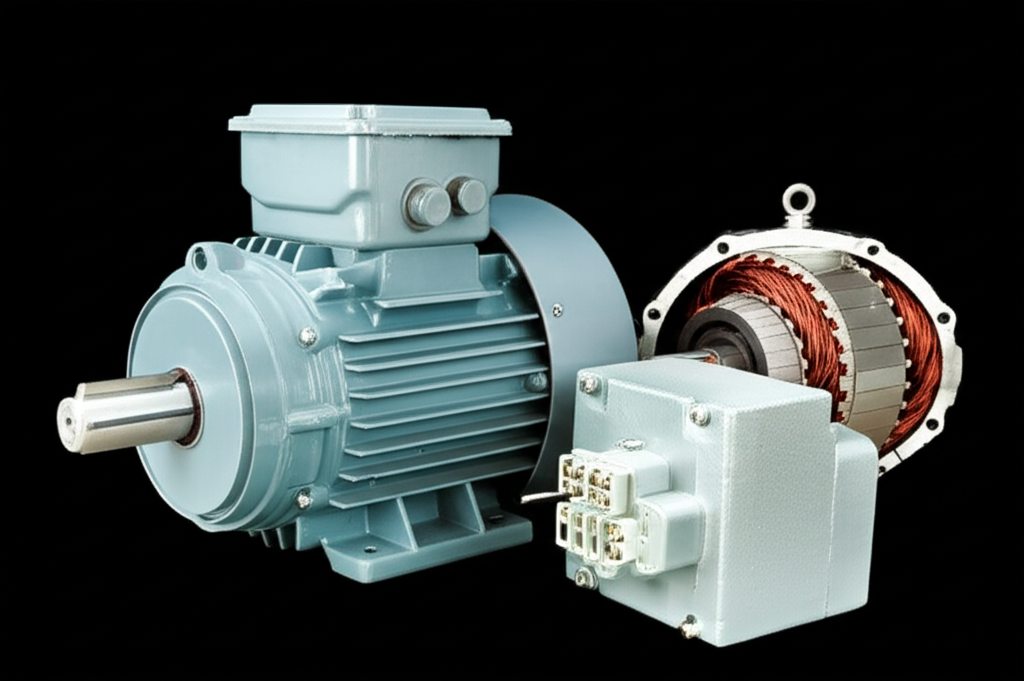
- Electric Motors: Every motor, from the one in your electric toothbrush to the one in an electric car, uses carefully shaped magnets and steel parts to create smooth, powerful rotation. The better the magnetic circuit, the more efficient the motor is.
- Speakers and Headphones: A speaker works by using a magnet to vibrate a cone and create sound. To get good sound from a small device, engineers need to focus the magnetic field very precisely.
- Hard Drives: Old computer hard drives used a tiny, powerful magnetic head to read and write data. The magnetic circuit had to be incredibly small and accurate.
- Medical MRI Machines: These life-saving machines use enormous, super-powerful magnetic circuits to create detailed images of the human body. The field has to be extremely uniform and controlled.
- Holding and Lifting Magnets: The magnets used in factories to lift heavy steel sheets or in junkyards to move cars are all designed with powerful flux concentrators to maximize their lifting force.
Each of these applications has a problem: the need for a strong, controlled magnetic field in a specific shape and size. And in every case, smart magnetic circuit design provides the solution.
How Do Clever Magnetic Designs Make Motors Spin?
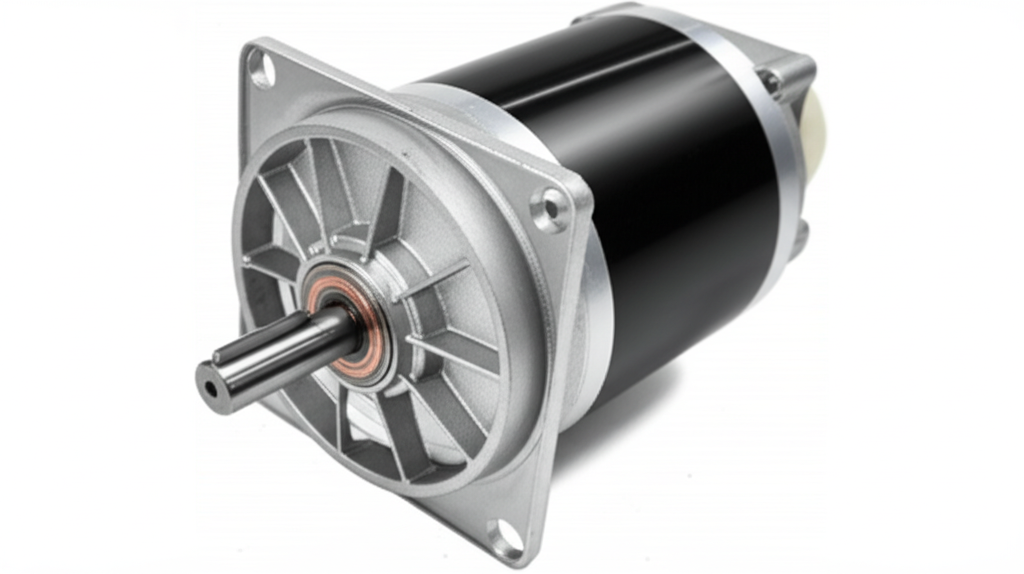
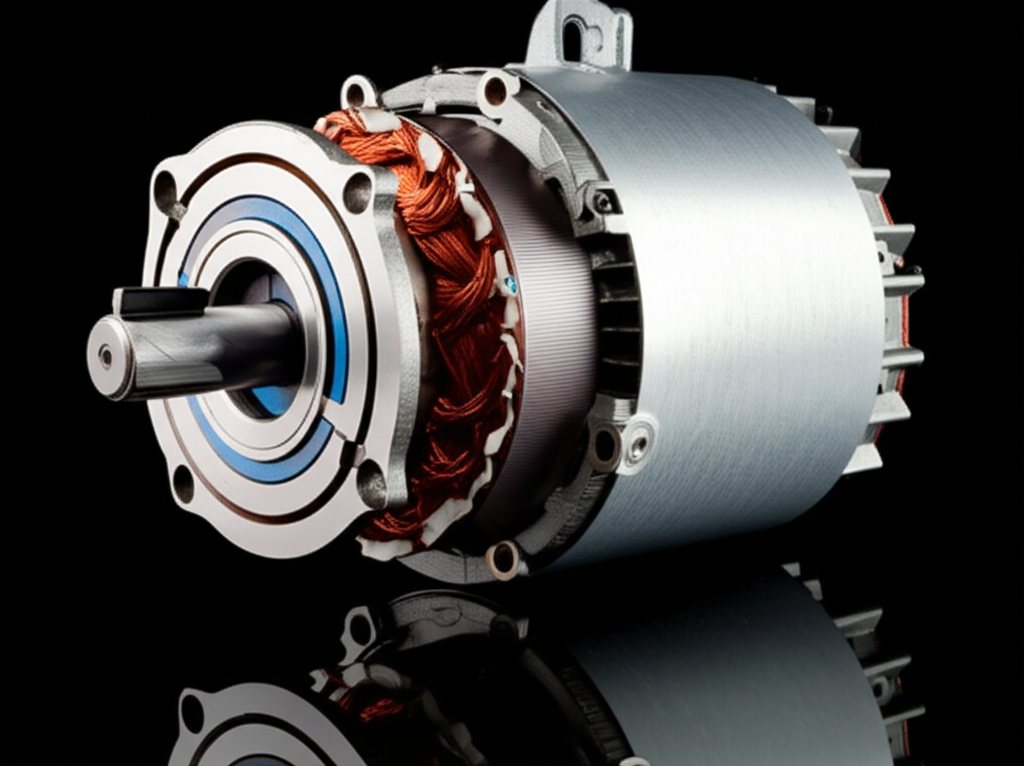
Let’s dive a little deeper into electric motors, because they are a perfect example of magnetic circuits at work. A motor is all about magnets pushing and pulling each other to create motion. You have stationary parts and spinning parts, and the magic happens in the tiny air gap between them. For a motor to work well, the magnetic forces in that gap have to be incredibly strong and perfectly timed.
If you just threw some magnets into a circle, you’d get a weak, jerky motor that gets hot and wastes a lot of electricity. You’d have a real motor problem on your hands. The magnetic field would be sloppy and uncontrolled, pushing in all sorts of inefficient directions. It would be like trying to push a merry-go-round with a hundred people all pushing at random times and in random directions. It wouldn’t work very well!
To solve this, engineers use precision-stamped pieces of special metal to build the core of the motor. These thin sheets, called laminations, are stacked together to create a solid-looking part. Because they are made from a material that magnetic flux loves to travel through, they act as a superhighway system, guiding the magnetic field with incredible accuracy. These carefully designed electrical steel laminations ensure that nearly all of the magnetic energy is used to create useful spinning motion, not wasted as heat. The shape and quality of the motor core laminations are arguably one of the most critical factors in how powerful and efficient a modern motor is.
What Happens When a Magnetic Circuit Goes Wrong?
A poorly designed magnetic circuit is more than just weak—it’s wasteful and can even be destructive. When the magnetic flux doesn’t have an easy, clear path to follow, it looks for shortcuts. Sometimes, it’s forced to travel through materials that don’t conduct it very well. This is like forcing a huge amount of water through a tiny, rusty pipe. It creates a lot of friction and resistance.
In a magnetic circuit, this “friction” creates something called eddy currents and hysteresis losses. You don’t need to know the complex physics behind those words. All you need to know is that they turn precious magnetic energy into useless heat. This is a huge problem.
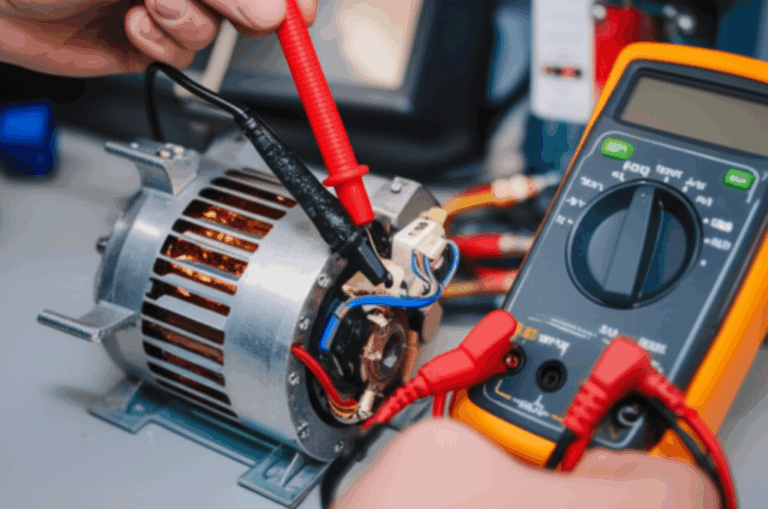
Have you ever felt an electric motor that was really hot after running for a while? A lot of that heat is probably coming from a magnetic circuit that isn’t as efficient as it could be. The motor is wasting electricity by turning it into heat instead of motion. This not only drains your batteries faster but can also damage the motor’s components over time. A good design, using things like a high-quality bldc stator core, minimizes these losses, allowing the motor to run cooler, quieter, and use far less energy.
How Can You Start Designing Your Own Magnetic Circuit?
You don’t need a fancy lab to experiment with these ideas. You can start right now with some simple things you might have around the house.
The best way to learn is by doing. See how different shapes and arrangements of steel change the magnet’s behavior. You’ll quickly get a feel for how to guide and control that invisible magnetic force.
Your Magnetic Masterplan
As you can see, there’s a lot more to magnets than just North and South poles. By understanding that magnetic flux is always looking for the easiest path, you can become a master of magnetism. You can guide it, shape it, and concentrate it to do exactly what you want. You don’t always need a bigger hammer; sometimes, you just need to know how to swing it better. Magnetic circuit design is how we swing the hammer of magnetism with incredible force and precision.
From the tiny motor that makes your phone vibrate to the giant magnets that power our world, these principles are everywhere. It’s a powerful reminder that sometimes the smartest solution isn’t about brute force, but about clever design.
Key Things to Remember:
- A magnetic circuit is the path that a magnet’s invisible force field (flux) follows.
- Instead of just using a bigger magnet, it’s often better to design a smarter circuit to control the magnetic field.
- Materials like iron and steel act like highways for magnetic flux, allowing you to guide it.
- Arranging magnets in special patterns, like a Halbach array, can make one side much stronger while canceling out the other side.
- Using pieces of steel as “flux concentrators” can funnel a magnetic field to a small point, dramatically increasing its strength.
- Good magnetic circuit design is essential for making things like electric motors efficient, powerful, and cool-running.