Inboard vs. Outboard Fuel Efficiency: Which Engine Saves You More?
Meta Description: Deciding between inboard and outboard motors? Discover which offers better fuel efficiency for your boat type and usage, with a direct comparison of consumption, costs, and performance factors.
Are Inboard or Outboard Motors More Fuel Efficient? A Comprehensive Guide
If you’re in the market for a new boat or considering repowering your current one, you’ve hit the big question: inboard or outboard? This decision goes way beyond looks or transom space. It hits you right in the wallet every time you visit the fuel dock. You’ve probably heard strong opinions from both sides of the aisle, with one person swearing by their trusty inboard diesel and another praising the performance of their twin four-stroke outboards.
So, who’s right? The honest answer is… it depends.
Asking whether an inboard or outboard is more fuel efficient is a bit like asking if a truck or a sedan is better on gas. Without knowing what you’re hauling or where you’re driving, the question is impossible to answer. The same principle applies on the water. The “winner” in the fuel economy race is completely tied to the type of boat you have, how you use it, and the specific engine technology you’re comparing.
This guide will break it all down for you. We’ll ditch the dock talk and get into the real engineering and operational factors that determine marine engine efficiency. We’ll look at the pros and cons of each setup, run through specific scenarios, and give you the knowledge to make an empowered, informed decision that fits your boating lifestyle and budget.
What We’ll Cover
- The Core Question: Inboard vs. Outboard Fuel Consumption
- Understanding Marine Fuel Efficiency Factors
- Inboard Motors: Fuel Efficiency Profile
- Outboard Motors: Fuel Efficiency Profile
- Direct Comparison: When One Outperforms the Other
- Beyond Engine Choice: Maximizing Your Boat’s Fuel Economy
- Conclusion: Making an Informed Decision
- Frequently Asked Questions (FAQs)
The Core Question: Inboard vs. Outboard Fuel Consumption
Let’s get one thing straight: there is no universal champion for fuel efficiency. A modern, direct-injection outboard can be wildly more efficient than an old, carbureted gasoline inboard. Conversely, a modern common rail diesel inboard will almost always outperform any gasoline engine on a heavy, long-range cruiser.
The debate isn’t about the label “inboard” or “outboard.” It’s about matching the right engine technology and propulsion system to the right application. We’re comparing complex systems where weight, torque curves, hull design, and operating speed all play a critical role in determining your GPH (gallons per hour) or MPG (miles per gallon).
To make a fair comparison, we need to first understand the variables at play.
Understanding Marine Fuel Efficiency Factors
Before we can crown a winner for your boat, you need to grasp the key elements that dictate how much fuel your engine burns. It’s rarely just one thing.
Engine Type & Technology
This is the biggest piece of the puzzle. Not all engines are created equal.
- Diesel vs. Gasoline: Diesel fuel contains about 10-15% more energy per gallon than gasoline. Combined with the high compression of diesel engines, this makes marine diesel engines the undisputed kings of fuel efficiency, especially for heavy loads and long-distance boating.
- Two-Stroke vs. Four-Stroke: Older carbureted two-stroke outboards were notorious gas guzzlers because they’d exhaust unburnt fuel and oil. Modern four-stroke outboard engines, with their advanced Electronic Fuel Injection (EFI), are vastly more efficient and environmentally friendly. Modern direct-injection two-strokes have also closed this gap significantly.
- Modern Tech: Advancements like direct injection, common rail diesel systems, and variable valve timing have drastically improved the horsepower-to-fuel-consumption ratio for both inboard and outboard motors.
Hull Design
Your boat’s hull is just as important as the engine. Think of it as the foundation for efficiency.
- Planing Hull: Found on most recreational boats like center consoles and runabouts, these hulls are designed to lift and ride on top of the water at speed. They require a burst of power to get “on plane” but can be very efficient once there. The lighter weight and power-to-weight ratio of outboards often makes them a perfect match here.
- Displacement Hull: Found on trawlers, sailboats, and large yachts, these hulls push through the water rather than riding on top of it. They are limited to a slower “hull speed” but can move immense weight with surprisingly little fuel, making them the ideal platform for high-torque diesel inboards.
Boat Weight & Load
This one’s simple physics: heavier things require more energy to move. Every extra cooler, piece of gear, or passenger you bring aboard will have a direct impact on your boat’s fuel consumption. This is also where the engine’s own weight comes in. Outboards, being lighter for a given horsepower, give an immediate efficiency advantage to lighter boats.
Operating Speed & RPM
Every engine has a “sweet spot”—an RPM range where it achieves maximum efficiency. Pushing your boat at Wide Open Throttle (WOT) will burn fuel at an astounding rate. Finding your optimal planing speed or a steady cruising speed for a displacement hull will dramatically extend your range. Smart Craft and NMEA 2000 fuel data displays are invaluable tools for finding this sweet spot in real-time.
Propeller Selection
A mismatched propeller is like trying to run a marathon in flip-flops. It’s incredibly inefficient. The right prop, with the correct pitch and diameter for your boat and engine combination, allows the engine to operate in its optimal RPM range. A damaged or incorrect propeller forces the engine to work harder, wasting fuel.
Maintenance & Condition
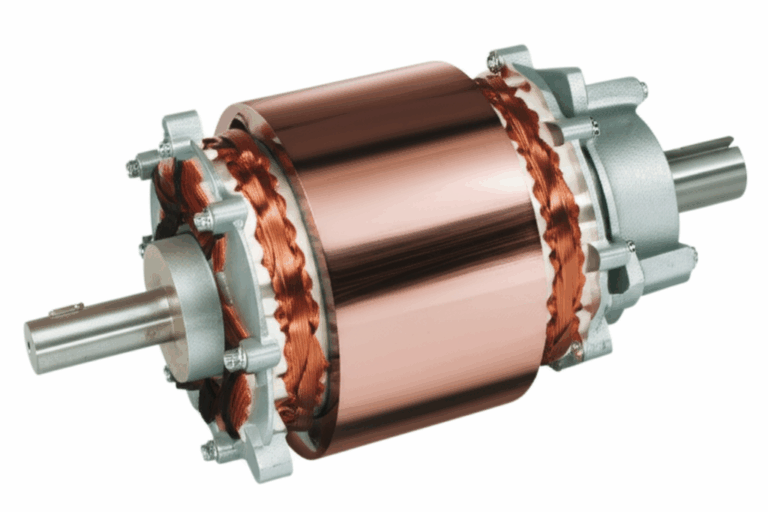
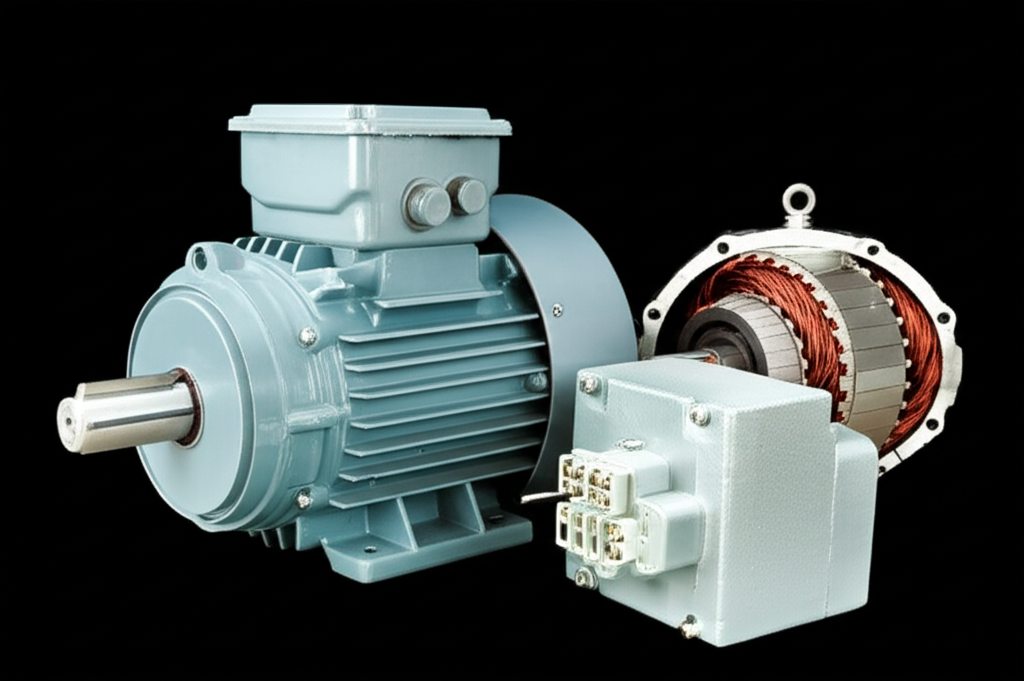
A well-maintained boat is an efficient boat. A dirty hull covered in marine growth creates significant drag, forcing your engine to burn more fuel to maintain the same speed. This is where anti-fouling hull fuel savings become obvious. Similarly, a poorly tuned engine with old spark plugs, clogged filters, or incorrect oil will never achieve its designed fuel economy. The internal components, such as the stator and rotor, must function flawlessly for the engine and its support systems to deliver peak performance.
Inboard Motors: Fuel Efficiency Profile
Inboard motors are located inside the boat’s hull, typically in a dedicated engine room or compartment. They connect to a propeller via a drive shaft that either goes straight through the bottom of the hull (shaft drive) or out through the transom in an integrated unit (sterndrive or I/O).
Types of Inboards
- Shaft Drive (Direct Drive/V-Drive): The classic, robust setup for cruisers and workboats. Simple, reliable, and keeps the engine weight centered.
- Sterndrive (Inboard/Outboard or I/O): A hybrid system that pairs an automotive-style engine block inside the boat with a steerable drive unit on the transom, similar to an outboard’s lower unit.
- Diesel vs. Gasoline: Inboards are available in both fuel types, but the diesel inboard is where this category truly shines for efficiency.
Pros for Efficiency
- The Diesel Advantage: For heavy boats and long-range cruising, nothing beats a diesel inboard. They produce massive torque at low RPMs, allowing them to move large displacement hulls with incredible efficiency. It’s not uncommon for a large trawler to achieve better than 2.0 MPG while cruising slowly, offering a range that gasoline engines can only dream of.
- Optimized for Heavy Loads: Inboards are integrated into the boat’s design from the ground up, often in vessels built for stability and consistent, low-RPM operation. This synergy between hull and engine leads to excellent fuel economy in their intended application.
Cons for Efficiency
- Gasoline Inboards: While powerful, gasoline inboards (especially older carbureted V8s) can be thirsty. In a direct comparison on a mid-size planing hull, a modern four-stroke outboard of similar horsepower will often be more fuel-efficient than a gasoline sterndrive.
- Weight Penalty: Inboard systems are heavy. The engine, transmission, and drive shaft add significant weight, which can require more power and fuel just to get the boat moving, particularly to get a planing hull onto plane.
Typical Applications: Cruisers, trawlers, large sportfishing yachts, sailboats (auxiliary power), and commercial workboats.
Outboard Motors: Fuel Efficiency Profile
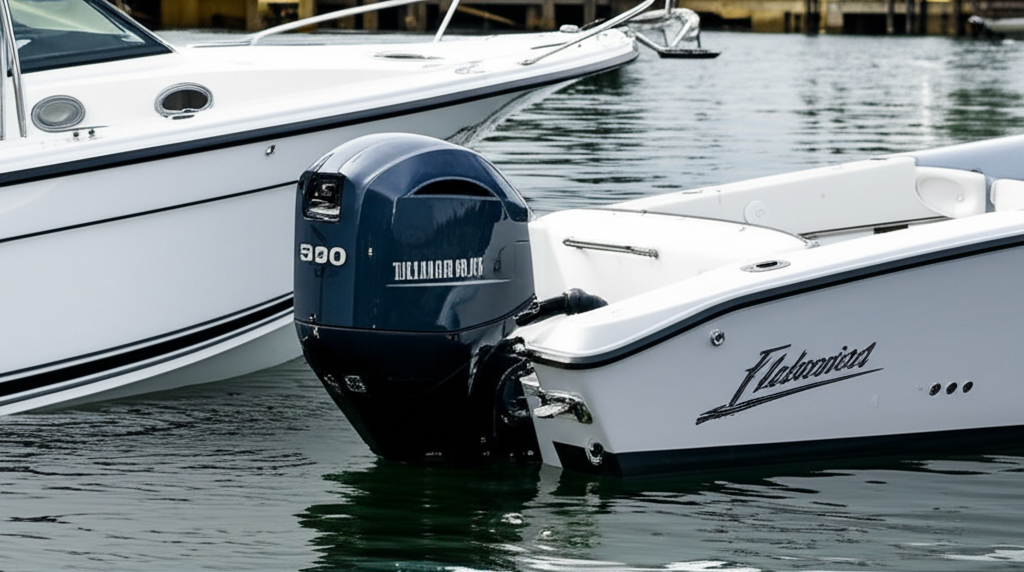
Outboard motors are self-contained units mounted directly to the transom of the boat. Everything—the engine, transmission, and propeller—is in one package. This design has seen incredible technological leaps over the past two decades.
Types of Outboards
- Modern 4-Stroke: These are the dominant force in the market today. Quiet, clean-burning, and remarkably fuel-efficient thanks to advanced EFI systems. Brands like Yamaha, Mercury, Suzuki, and Honda are leaders in this space.
- Direct-Injection 2-Stroke: These engines inject fuel directly into the cylinder, eliminating the waste of old 2-strokes. They offer a fantastic power-to-weight ratio and are very efficient.
Pros for Efficiency
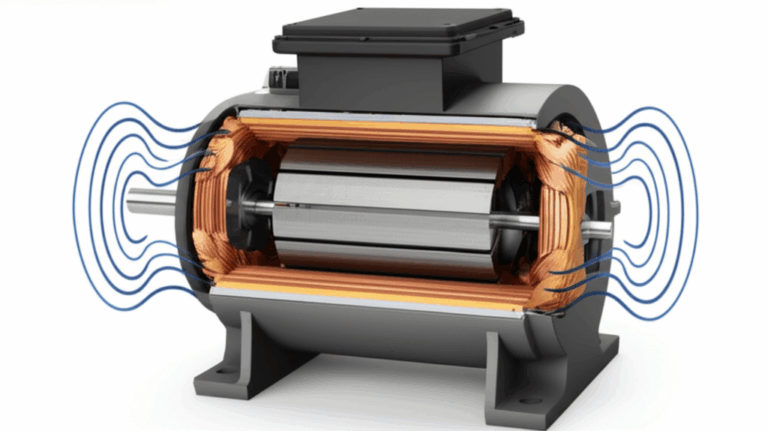
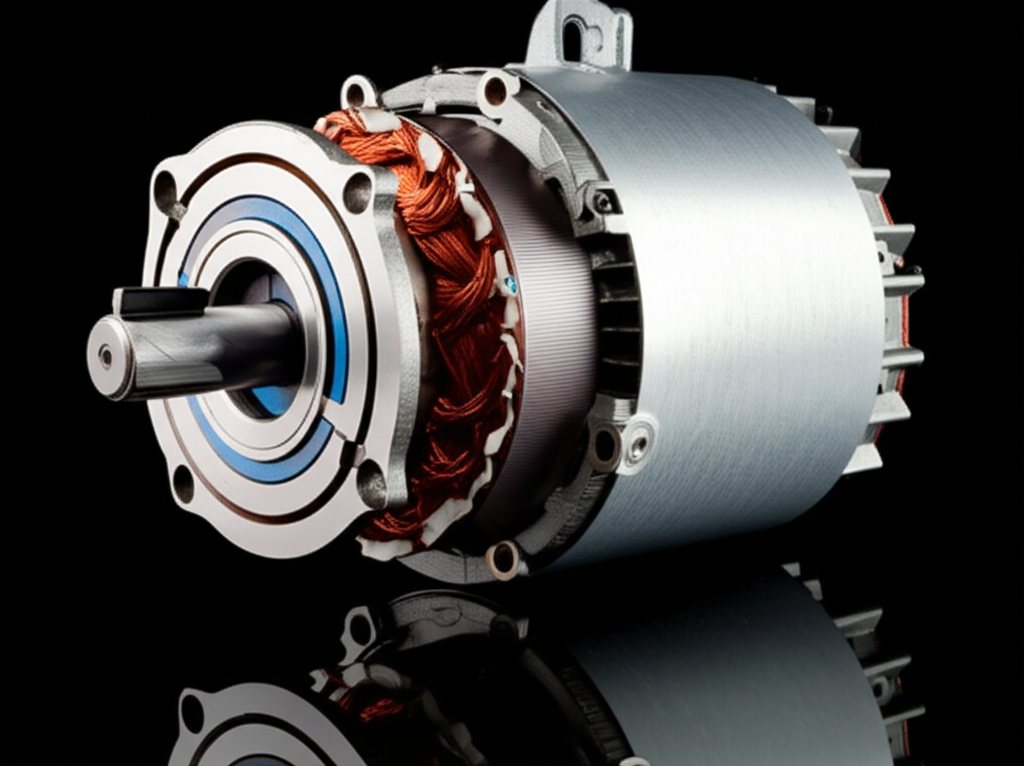
- Power-to-Weight Ratio: This is the outboard’s ace in the hole. For a given horsepower, an outboard is significantly lighter than an inboard system. On planing hulls, this reduced weight means the boat can get on plane faster and stay there with less throttle, saving a ton of fuel. This efficiency is rooted in advanced design, extending to the very heart of the engine’s power-generating components, where quality electrical steel laminations help minimize energy loss.
- Advanced Technology: The competition in the outboard market is fierce, which has driven rapid innovation. Features that were once high-end, like EFI, are now standard, delivering precise fuel-to-air mixtures that maximize power per gallon.
- Trim and Tilt: The ability to easily adjust the trim and tilt of an outboard allows an operator to fine-tune the boat’s running angle for optimal performance and fuel economy in changing conditions, a feature that offers more range than the trim on a sterndrive.
Cons for Efficiency
- Not Ideal for Heavy Displacement: While you can put an outboard on almost anything, they aren’t the best choice for moving very heavy displacement hulls. A diesel inboard’s low-end torque is simply better suited for that task.
- Gasoline Only: Outboards run on gasoline, so they can never match the inherent energy-density advantage of a diesel inboard.
Typical Applications: Center consoles, pontoon boats, bay boats, runabouts, and small to mid-sized fishing boats.
Direct Comparison: When One Outperforms the Other
Let’s put this knowledge to the test in a few real-world boating scenarios.
Scenario 1: The Heavy Displacement Hull (e.g., 40-foot Trawler or large Cruiser)
You’re planning long-range cruises up the coast, running for hours or days at a time at a steady 7-9 knots. You need reliability and, above all, range.
- Winner: Diesel Inboard
- Why: This is the inboard’s home turf. A 200HP diesel engine in a 40-foot trawler might only burn 1.5-2.5 GPH at 7 knots. Its high-torque, low-RPM operation is perfectly matched to the displacement hull’s needs. The superior energy content of diesel fuel and the engine’s design make it the hands-down winner for this kind of boating, offering exceptional range and lower fuel cost per hour. An outboard setup would struggle and be far less efficient.
Scenario 2: The Mid-Size Planing Hull (e.g., 28-foot Center Console or Runabout)
Your goal is getting out to the fishing grounds quickly or enjoying watersports with the family. You value speed, agility, and a good balance of performance and economy at a cruising speed of 25-35 mph.
- Winner: Modern 4-Stroke Outboard
- Why: This is a much closer race, but modern outboards often pull ahead. A 28-foot center console with twin 200HP 4-stroke outboards can achieve an impressive 1.8-2.2 MPG while planing at 30 mph. A similar-sized boat with a single 350HP gasoline sterndrive might only get 1.5-1.8 MPG due to the heavier overall package. The outboard’s superior power-to-weight ratio and advanced EFI give it the edge in getting the planing hull up and running efficiently.
Scenario 3: The Smaller, Lighter Planing Boat (e.g., 18-foot Runabout or Skiff)
This is your classic lake boat or inshore fishing machine. It’s all about simplicity, performance, and maximizing fun without breaking the bank.
- Winner: Outboard
- Why: This isn’t even a competition. The outboard is significantly lighter, simpler to install and maintain, and takes up no interior space. A modern 90HP or 115HP four-stroke outboard is incredibly efficient for this size and weight, providing zippy performance and sipping fuel. An inboard system would be far too heavy and complex, ruining the boat’s handling and efficiency.
| Feature / Metric | Diesel Inboard (e.g., Yanmar 6LP) | Gasoline Sterndrive (e.g., Mercruiser 6.2L) | Modern 4-Stroke Outboard (e.g., Yamaha F250) |
|---|---|---|---|
| Fuel Type | Diesel | Gasoline | Gasoline |
| Avg. GPH (Cruising) | 8-12 GPH | 15-22 GPH | 12-18 GPH |
| Avg. MPG (Cruising) | 2.0 – 3.0 MPG | 1.0 – 1.8 MPG | 1.5 – 2.5 MPG |
| Efficiency Trend | Highest (heavy displacement) | Moderate | High (planing hulls) |
| Optimal Use Case | Long-range cruising, trawlers | Recreational runabouts, sport cruisers | Center consoles, pontoons, runabouts |
Note: Data is illustrative and varies widely based on boat, load, and conditions.
Beyond Engine Choice: Maximizing Your Boat’s Fuel Economy
No matter which engine you choose, your habits and maintenance routines have a huge impact on your boat’s fuel economy. Here are some pro tips to save fuel on a boat:
- Maintain a Clean Hull: Barnacles and algae create massive drag. A clean, slick hull with a good coat of antifouling paint can improve fuel efficiency by 10% or more.
- Proper Engine Maintenance: Follow your service schedule religiously. Clean filters, fresh oil, and properly gapped spark plugs ensure your engine is running at peak efficiency. The internal health of the engine, right down to the quality of the rotor core lamination in the alternator, contributes to long-term reliability and performance.
- Optimal Trim & Tilt: Learn to use your trim. Trim the drive out to raise the bow when getting on plane, then trim it back in to find the sweet spot where the boat runs level with the least resistance.
- Propeller Optimization: If your engine can’t reach its recommended WOT RPM range, your propeller is likely wrong. Consult a prop specialist to ensure you have the right pitch and diameter.
- Load Management: Don’t treat your boat like a storage unit. Unload unnecessary gear. Every 100 pounds of extra weight can measurably decrease your fuel efficiency.
- Find Your Smart Cruising Speed: Use your fuel flow sensor (or an app) to find your boat’s most efficient RPMs. It’s rarely full throttle. Backing off just a few hundred RPMs can often cut your fuel burn by 20-30% with only a small drop in speed.
Conclusion: Making an Informed Decision
So, are inboard or outboard motors more fuel efficient? The definitive answer is: the most efficient engine is the one that is best matched to the boat’s hull and its intended mission.
Here are the key takeaways:
- For heavy displacement hulls used for long-range cruising (like trawlers and large yachts), the diesel inboard is the undisputed champion of fuel efficiency due to its high torque, low-RPM operation, and the energy density of diesel fuel.
- For light-to-mid-size planing hulls (the vast majority of recreational boats), the modern four-stroke outboard is often more fuel-efficient than its gasoline inboard/sterndrive counterpart because of its superior power-to-weight ratio and advanced technology. The underlying motor principle of maximizing output while minimizing waste is where these modern marvels excel.
Ultimately, your choice should be based on a holistic view. Consider the boat’s primary use, performance needs, maintenance costs, and upfront price in addition to the long-term fuel costs. By understanding the factors at play, you can confidently choose the power system that will save you money at the pump and maximize your enjoyment on the water.
Frequently Asked Questions (FAQs)
Q: Is a diesel inboard always more fuel efficient than a gasoline outboard?
A: In terms of gallons per hour for a specific task (like moving a heavy boat), yes, a diesel is almost always more efficient. However, on a lighter, faster boat designed for an outboard, forcing a heavy diesel system into it would be very inefficient. It’s all about the right tool for the right job.
Q: How much does hull design affect fuel efficiency?
A: Immensely. Hull design is arguably as important as the engine itself. A planing hull is designed for speed and efficiency on top of the water, while a displacement hull is designed for steady, efficient movement through the water. Mismatching the engine type to the hull design is the fastest way to get terrible fuel economy.
Q: Can I improve my existing boat’s fuel efficiency?
A: Absolutely! The easiest and most effective ways are to keep the hull bottom perfectly clean, ensure your engine is professionally maintained, make sure you have the correct propeller, and learn to operate your boat at its most efficient cruising speed instead of running at full throttle.
Q: What’s the biggest factor in boat fuel consumption?
A: Besides the engine/hull combination, the single biggest factor you control is speed. A boat’s resistance through water increases exponentially, not linearly, with speed. Slowing down just a little bit from wide-open throttle is the most significant thing you can do on any given trip to drastically reduce your fuel burn.