What Are Eddy Currents? The Amazing Invisible Force That Powers and Stops Our World
Have you ever wondered how a metal detector finds a coin or how a fast roller coaster stops so smoothly without a sound? The answer is a secret, invisible force called eddy currents. These little loops of electricity are everywhere! They can be super helpful, but they can also cause big problems. In this article, you’ll discover what eddy currents are, how they work, and see all the cool and surprising ways they affect your life every day. Let’s solve this mystery together!
Table of Contents
- What Are These Invisible Eddy Currents Anyway?
- How Are Eddy Currents Born? The Science Behind the Swirls
- What Makes Eddy Currents Stronger or Weaker?
- How Do We Use Eddy Currents to Do Cool Things?
- Are Eddy Currents Ever a Bad Thing?
- How Do We Stop Bad Eddy Currents?
- Can You See Eddy Currents in Real Life?
- Why Should We Care About These Swirling Currents?
- The Big Ideas to Remember
What Are These Invisible Eddy Currents Anyway?
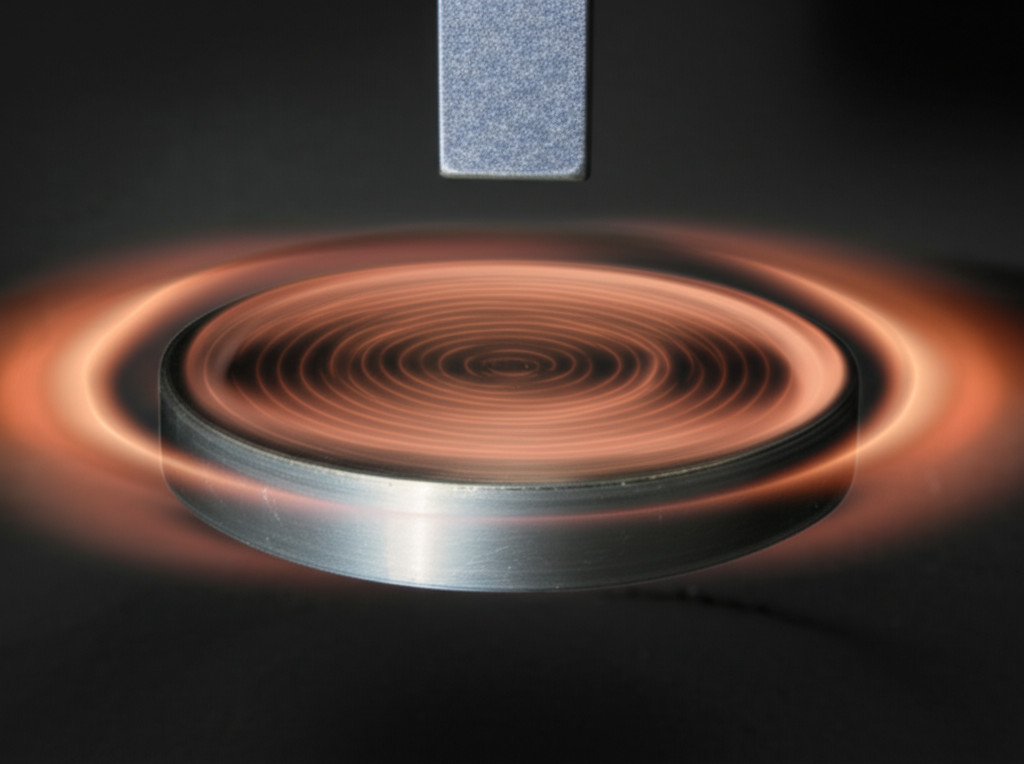
Imagine you’re stirring honey in a jar. You can see the honey swirling in little circles, right? Now, picture this: an invisible force can make tiny swirls of electricity move inside a piece of metal, like a copper pipe or an aluminum pan. These swirls are called eddy currents. They are also known as Foucault currents, named after the scientist who found them. They are real loops of induced current that flow inside conductors—materials that let electricity pass through them easily.
So, what are their main features? First, these currents always flow in closed loops, like tiny whirlpools. They pop up whenever a magnetic field near a conductor changes. Think of a magnet moving past a piece of metal. That change creates the currents. Second, because of something called Lenz’s Law, these eddy currents create their own induced magnetic field. This new field always pushes back against the change that made it. It’s like the current is saying, “Whoa, slow down! I don’t like this change!” This creates resistive forces and a damping effect. Finally, these swirling currents create heat. A lot of it! This is called the heating effect or Joule heating.
How Are Eddy Currents Born? The Science Behind the Swirls
To understand how eddy currents start, we need to thank a few brilliant scientists. A long time ago, a man named Michael Faraday discovered a super important rule called Faraday’s Law of Induction. He figured out that if you have a changing magnetic field near a conductor, you create an electrical push, called an electromotive force (EMF). This push is what gets the electricity moving. The whole process is called electromagnetic induction. It’s the key idea behind how a generator works (generator principles) and even how an electric motor runs (motor operation).
Then, another smart scientist, Heinrich Lenz, added to this idea with Lenz’s Law. He said that the eddy currents will flow in a direction that creates a magnetic field to fight the original change. It’s nature’s way of keeping things balanced. So, if you move a magnet’s north pole toward a copper sheet, the eddy currents will create their own little north pole to push your magnet away! This push is a type of Lorentz force acting on the moving charges in the metal.
All of these amazing ideas were later put into a set of powerful rules by James Clerk Maxwell. His famous Maxwell’s equations describe everything about electromagnetic fields, including how light works and how these eddy currents are formed. They explain the link between electricity and magnetism, showing how they dance together. It all starts with a variable magnetic field and a conductor.
What Makes Eddy Currents Stronger or Weaker?
Not all eddy currents are the same. Some are super strong, while others are barely there. What makes the difference? Four main things control their strength. First is the power of the magnetic field. A stronger magnet creates stronger eddy currents. Simple enough! Second is how fast the magnetic field is changing. This is the rate of change of magnetic flux. If you move your magnet faster or use an alternating current (AC) that switches back and forth quickly, you get much stronger currents. A high-frequency alternating current will make them really powerful.
Third is the material itself. The electrical conductivity of the conductor is a huge factor. Materials with high conductivity, like copper and aluminum, allow eddy current flow easily, creating strong currents. A material’s electrical resistivity is the opposite of conductivity. High resistivity means weaker currents. We also have to think about a material’s magnetic permeability which tells us how well it supports a magnetic field. All these material properties matter. The fourth factor is the size and shape of the object. A bigger, thicker piece of metal will have bigger, stronger eddy currents than a thin wire.
How Do We Use Eddy Currents to Do Cool Things?
Even though they can be a pain sometimes, we have found some amazing ways to use eddy currents. We’ve turned this invisible force into a powerful tool in many areas. It’s a great example of applications of eddy currents.
Here are some of the coolest uses:
- Finding Tiny Cracks: In a process called non-destructive testing (NDT), or more specifically, eddy current testing (ECT), we use these currents to keep us safe. An eddy current probe is used for aerospace inspection to check airplane parts for tiny cracks we can’t see. A special eddy current sensor sends out a magnetic field, creating currents in the metal. If there’s a crack or a flaw detection is needed for surface defects or even subsurface defects, it changes the flow of the currents. A machine reads these changes in amplitude and phase angle, helping with defect characterization and ensuring planes are safe to fly. This material testing is also used in automotive testing and to check pipes in power plants. The signal interpretation from the eddy current response is a key part of quality control. Pulsed eddy current and remote field eddy current are advanced methods used for this.
- Cooking and Heating: Have you ever seen an induction cooking stove? It uses eddy currents! Under the glass surface, an electromagnetic coil creates a fast-changing magnetic field. This field induces powerful eddy currents directly in the bottom of your metal pot or pan. The currents cause massive heat generation, cooking your food super fast without a flame. This same idea, called induction heating or inductive heating, is used in factories for heat treatment to make metal parts stronger. It’s way more efficient than a regular oven.
- Stopping a Roller Coaster: This is one of my favorites! Eddy current brakes are used on trains and roller coasters to provide smooth, silent, and powerful braking. They are a type of electromagnetic braking. Powerful magnets are lowered next to a metal fin on the train. As the fin moves past the magnets, strong eddy currents are created. These currents make their own magnetic field that pushes back on the magnets, slowing the train down without ever touching it. This is also used in railway braking systems. An eddy current dynamometer is a device used to test engine power using this same principle.
- Sorting Trash for Recycling: How do you separate an aluminum can from plastic bottles in a giant pile of recycling? With an eddy current separator! A fast-spinning magnetic rotor creates eddy currents in the non-ferrous metals like aluminum. These currents create a magnetic field that repels the aluminum, literally throwing the cans out of the waste stream into a separate bin! This is a great tool for material sorting. It doesn’t work on ferrous metals (like iron and steel) because they are strongly attracted to the magnet, not repelled by the eddy currents.
Are Eddy Currents Ever a Bad Thing?
You bet they are. While eddy currents are our friends in brakes and cooktops, they can be real troublemakers in other machines. This is the main one of the drawbacks of eddy currents. The biggest problem is unwanted power losses and heating.
Think about a transformer. You see them on power poles, and their job is to change the voltage of electricity. They have a big metal transformer core inside. Since a transformer uses alternating current (AC), its magnetic field is always changing. This creates big eddy currents swirling inside that solid metal core. These currents don’t do any useful work. They just turn precious electrical energy into wasted heat. This is a big part of hysteresis losses and it makes the transformer less efficient. You’re paying for electricity that just heats up the transformer!
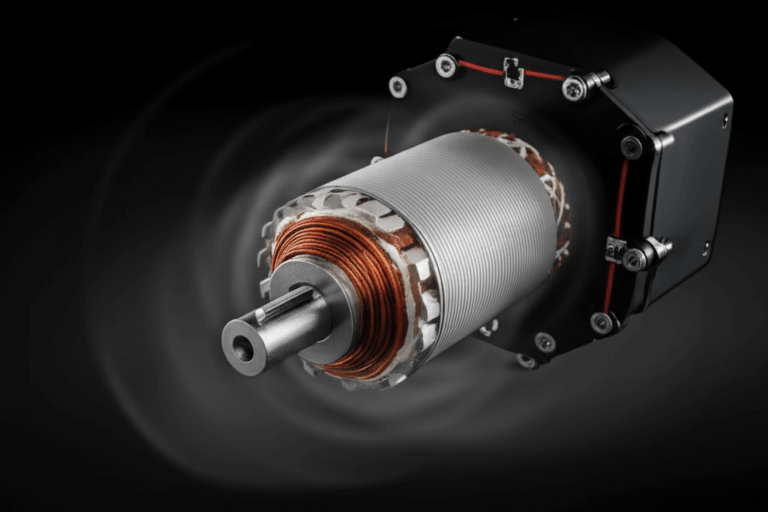
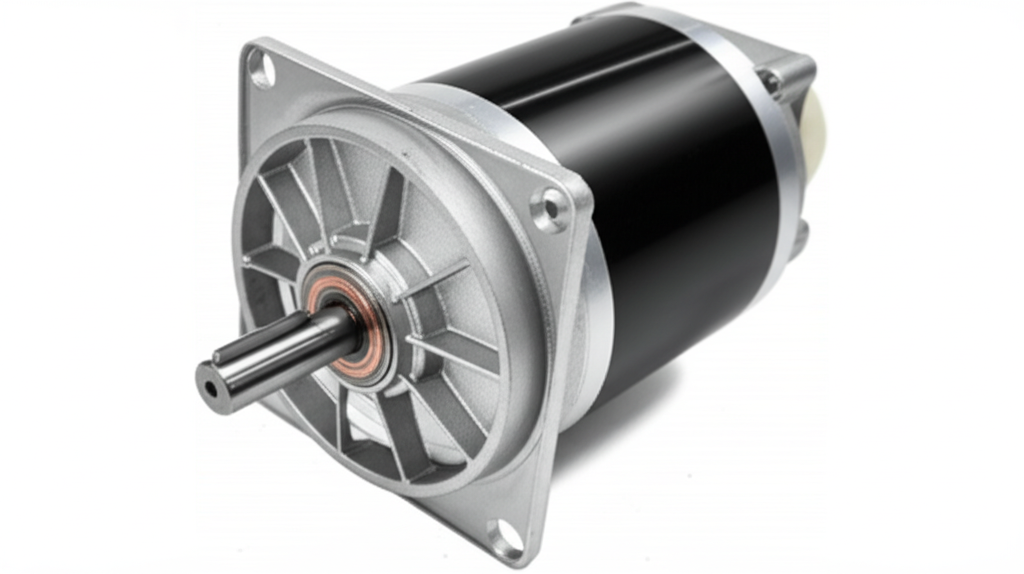
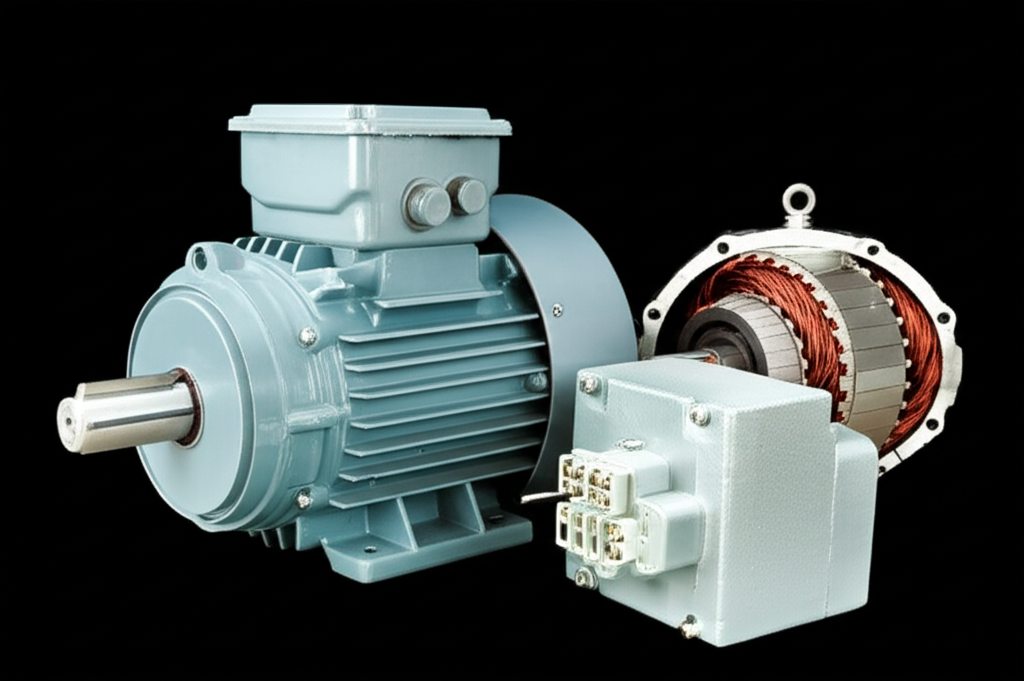
This isn’t just a small issue. In big power transformers, these eddy current losses can waste up to 5% of the energy. That’s a lot of power! This wasted energy can make the transformer get dangerously hot, which could damage it over time. The same exact problem happens in the metal cores of electric motors and generators. The swirling eddy currents create a drag force, or magnetic damping, that makes the motor harder to turn, wasting energy and reducing its power. This can be a real headache for engineers trying to design efficient machines.
| Device | Problem Caused by Eddy Currents | Consequence |
|---|---|---|
| Transformer | Unwanted heating in the core | Energy waste, reduced efficiency, risk of overheating |
| Electric Motor | Creates a “drag” force opposing rotation | Lower power output, more electricity needed, heat buildup |
| Generator | Resists the turning motion | Requires more mechanical energy to produce electricity |
| High-Frequency Circuits | Skin Effect confines current to surface | Increased electrical resistance, power loss as heat |
How Do We Stop Bad Eddy Currents?
So, we have this big problem of wasted energy. It agitates engineers and companies because it means their products are less efficient and cost more to run. What’s the solution? Luckily, some very smart people figured out a clever trick to stop these currents from getting out of control. The secret is to break up their path.
Remember, eddy currents love to flow in big, open loops. If you can stop them from making those big loops, you can make them much weaker. The most common way to do this is by making a laminated core. Instead of a solid block of metal, engineers build the core from a stack of very thin metal sheets. A fantastic example of this can be seen in high-quality transformer lamination core designs. Each thin sheet, or lamination, is coated with a tiny layer of insulation, like varnish. When you stack them all together, the insulation stops the eddy currents from crossing from one sheet to the next.
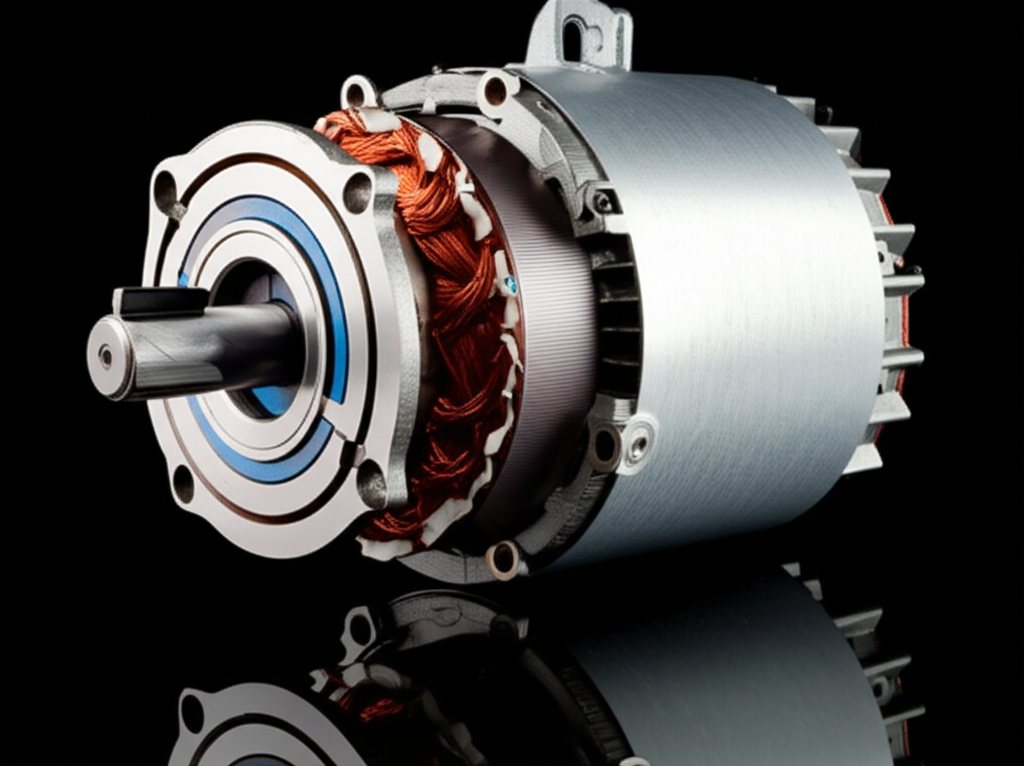
The currents can still form tiny, weak swirls inside each individual sheet, but they can’t form the big, powerful swirls that cause all the trouble. This simple idea can reduce eddy current losses by over 90%! It’s why if you look closely at a transformer or an electric motor, you’ll see the core is not a solid piece of metal. This is true for all parts of a motor, and using excellent motor core laminations is essential for performance. Companies like SinoLami specialize in creating these precise electrical steel laminations that make our machines so much more efficient. They make the special silicon steel laminations that are perfect for this job.
Can You See Eddy Currents in Real Life?
While you can’t see the currents themselves, you can definitely see what they do! Here’s a simple experiment you might see in a science class. Imagine you have a strong magnet and a pendulum made from a sheet of aluminum swinging back and forth. If you let it swing freely, it will go back and forth for a long time.
Now, place the magnet so that the aluminum sheet has to swing through its magnetic field. What happens? The pendulum suddenly stops, as if it’s moving through thick molasses! It’s an amazing example of magnetic damping. As the aluminum moves through the magnetic field, eddy currents are created inside it. These currents create an opposing magnetic field that pushes against the magnet, bringing the pendulum to a quick halt. You are witnessing the power of eddy currents right before your eyes. This is the same principle that helps sensitive weighing scales settle down quickly to give you a stable reading.
Why Should We Care About These Swirling Currents?
Eddy currents are a fundamental part of physics that shows the deep connection between electricity and magnetism. They are not just a curious idea from a textbook; they are a powerful force that engineers have learned to both use and control. Understanding them helps us build better, faster, and more efficient technology.
From the metal detector that helps a treasure hunter find a gold coin to the magnetic levitation that could lift future trains, eddy currents are at work. They are in the magnetic stirring devices in a science lab and the electromagnetic pumps that move liquid metal. They are a perfect example of the dual nature of science: a phenomenon can be both incredibly useful and a big problem, depending on where it shows up. By learning how to manage the effects of eddy currents, we make everything from our power grid to our kitchen appliances better.
At SinoLami, we are experts in controlling the unwanted effects of eddy currents in motors and transformers. The efficiency of a modern motor depends entirely on the quality of its magnetic core. Using precisely engineered components like a stator core lamination is not just an improvement—it’s a necessity. We provide the advanced lamination solutions that allow engineers to build powerful and efficient machines, turning the problem of eddy currents into a solved issue.
The Big Ideas to Remember
We’ve been on a big journey into the invisible world of eddy currents. It can seem complex, but it boils down to a few key ideas.
Here’s a quick summary of what we learned:
- What They Are: Eddy currents are little loops of electrical current that swirl inside a metal conductor when a magnetic field around it changes.
- How They Form: They are caused by electromagnetic induction, a rule discovered by Michael Faraday.
- What They Do: They always create their own magnetic field that opposes the change that made them (Lenz’s Law), and they always produce heat.
- The Good Side: We use them for amazing things like braking high-speed trains, cooking food on induction stoves, finding metal underground, and performing non-destructive testing on critical machinery.
- The Bad Side: They can cause major power losses and unwanted heat in transformers and electric motors, making them less efficient.
- The Solution: We can stop bad eddy currents by using laminated cores, which are stacks of thin, insulated metal sheets that break up the path of the current.
So next time you see a quiet roller coaster glide to a stop, you’ll know its secret: the invisible, swirling power of eddy currents at work!
References: