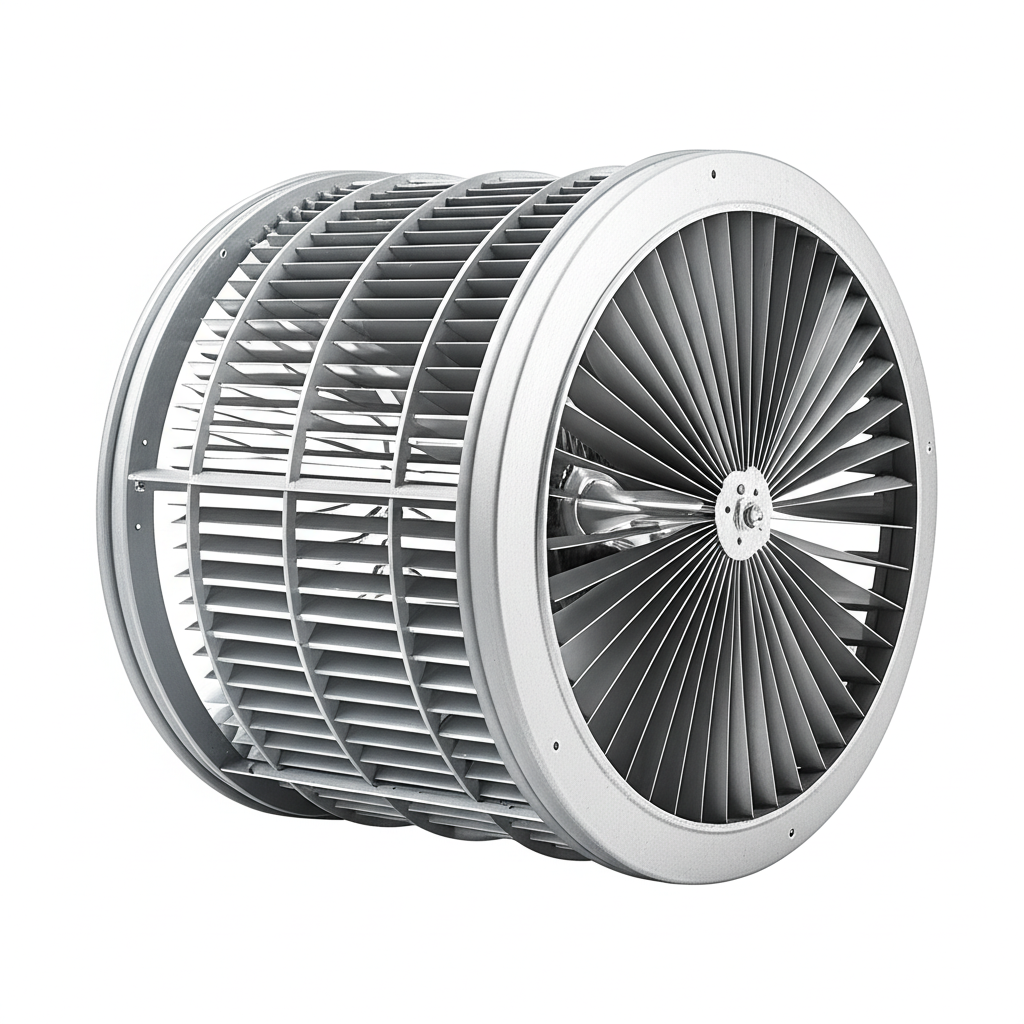
What is a Squirrel Cage Rotor and How Does It Work?
If you’ve ever wondered what makes an induction motor spin, the answer lies in a remarkably simple yet ingenious component: the squirrel cage rotor. It’s the heart of the most common type of electric motor in the world, powering everything from industrial fans and pumps to your washing machine and refrigerator. But what exactly is a squirrel cage rotor, and how does it work without any direct electrical connections to its rotating part?
Let’s dive into the fascinating world of this fundamental engineering component. We’ll explore its design, the principles behind its operation, and why it remains a cornerstone of modern machinery.
In This Article
- What is a Squirrel Cage Rotor?
- How a Squirrel Cage Rotor Works: The Magic of Induction
- Key Components of a Squirrel Cage Rotor
- Advantages of the Squirrel Cage Rotor
- Common Applications
- The Importance of Lamination
What Exactly is a Squirrel Cage Rotor?
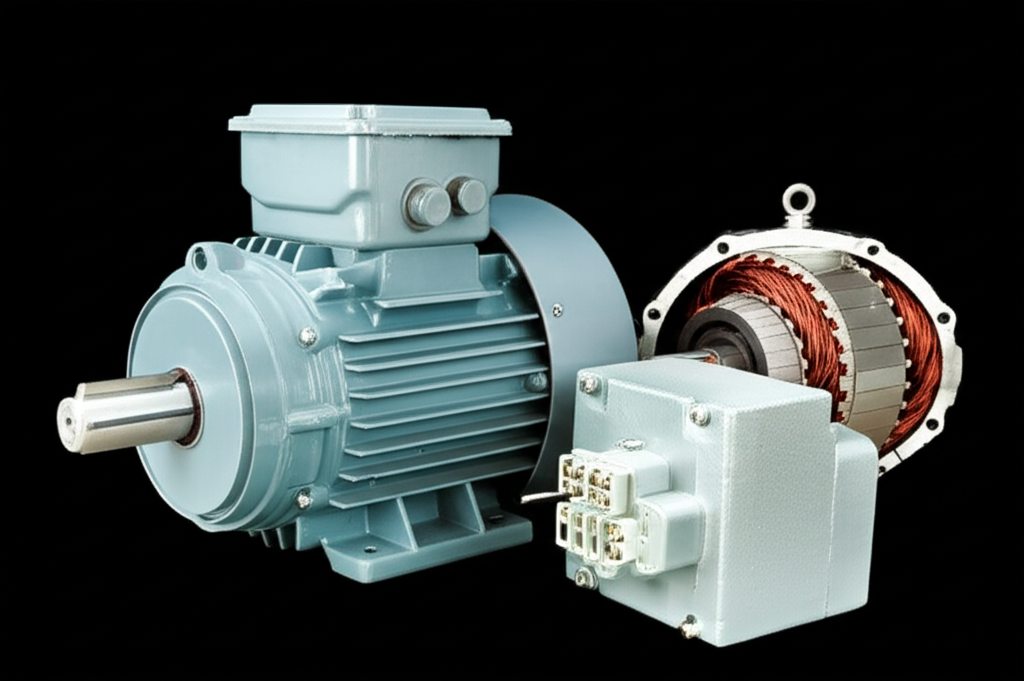
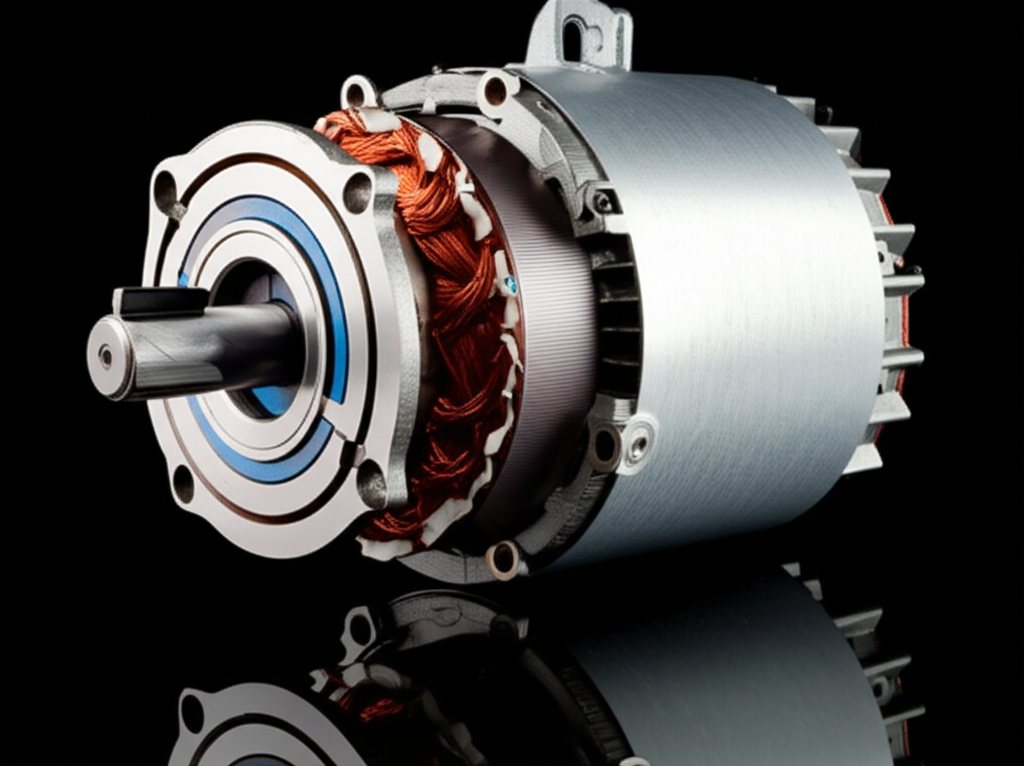
A squirrel cage rotor is the rotating part of the common squirrel-cage induction motor. Its name comes from its unique shape, which resembles the exercise wheels for pet hamsters or squirrels. It consists of a cylinder of laminated steel with conductive bars, usually made of aluminum or copper, running along its length. These bars are connected at both ends by shorting rings, forming a closed electrical circuit.
Unlike other motor types, the squirrel cage rotor has no brushes, commutators, or slip rings. This simple, robust construction is the key to its reliability and widespread use in countless applications.
How Does a Squirrel Cage Rotor Work? The Magic of Induction
The principle behind the squirrel cage motor is electromagnetic induction—a concept first discovered by Michael Faraday in 1831. It works much like a transformer. Here’s a step-by-step breakdown:
Think of it like a carrot on a stick in front of a donkey. The donkey (rotor) is always trying to catch the carrot (the rotating magnetic field), but it never quite can. This continuous chase is what makes the motor turn.
Key Components of a Squirrel Cage Rotor
The beauty of the squirrel cage rotor lies in its simplicity. It has only a few key parts:
- Rotor Core: The central part of the rotor is made from a stack of thin, high-grade steel laminations. This laminated core is designed to reduce energy losses caused by eddy currents. If the core were a solid block of steel, the rotating magnetic field would induce large, wasteful currents within it, generating excessive heat and reducing efficiency. By using thin, insulated laminations, these eddy currents are confined to very small loops, minimizing their effect.
- Rotor Bars: These are conductive bars (usually aluminum, but sometimes copper for higher efficiency applications) that run through slots in the rotor core. They are the pathways for the induced current.
- End Rings: These conductive rings are located at each end of the rotor and are connected to the ends of all the rotor bars. Their purpose is to short-circuit the bars, completing the electrical circuit and allowing current to flow freely.
Advantages and Disadvantages of Squirrel Cage Rotors
The design of the squirrel cage rotor offers several significant benefits, which is why it’s the most common type of AC motor used today.
Advantages:
- Robust and Reliable: With no brushes or slip rings to wear out, squirrel cage motors are incredibly durable and require very little maintenance. This makes them ideal for applications where reliability is paramount.
- Simple Construction: The simple design is easy to manufacture, making them cost-effective and widely available.
- Self-Starting: Unlike some single-phase motors, three-phase squirrel cage induction motors are self-starting and don’t require external starting mechanisms.
- High Efficiency: Modern designs with high-quality materials can achieve efficiencies exceeding 95%, especially when paired with a Variable Frequency Drive (VFD).
Disadvantages:
- Limited Speed Control: Without a VFD, the speed of a standard squirrel cage motor is fixed by the frequency of the power supply and the number of poles in the motor.
- High Inrush Current: During startup, these motors can draw a very high current (often 5 to 7 times the normal running current), which can cause voltage dips in the power supply.
- Lower Starting Torque: Compared to other motor types like DC motors or wound rotor induction motors, the starting torque is relatively low.
Common Applications
Because of their ruggedness, low cost, and reliability, squirrel cage motors are found everywhere. Common applications include:
- Industrial Machinery: Pumps, fans, blowers, compressors, and conveyors.
- Manufacturing: Driving machine tools like lathes, mills, and drills.
- Appliances: Powering washing machines, dryers, refrigerators, and air conditioners.
- Transportation: Used in electric vehicles and traction systems.
The Importance of High-Quality Lamination
The efficiency and performance of a squirrel cage motor heavily depend on the quality of its stator and rotor laminations. These thin sheets of electrical steel are crucial for minimizing energy losses.
- Reducing Eddy Current Losses: As mentioned, laminations break up the path for wasteful eddy currents. Thinner laminations and better insulation between them result in lower losses and higher motor efficiency.
- Minimizing Hysteresis Losses: The type of steel used also affects hysteresis losses, which occur as the magnetic domains within the steel rapidly change direction. High-quality silicon steel, often used in electrical steel laminations, is engineered to minimize these losses.
Ultimately, the humble squirrel cage rotor is a masterpiece of engineering simplicity and efficiency. Its ability to convert electrical energy into powerful rotational motion with minimal maintenance has made it an indispensable component of the modern world.