What is IE2 Motor Efficiency? A Simple Guide to Saving Money and Energy
Have you ever looked at your factory’s or workshop’s electric bill and felt your jaw drop? It’s a huge expense. A lot of that cost comes from the electric motors running your machines. Many older motors are like leaky faucets, constantly dripping away your money in the form of wasted energy. This waste adds up day after day, hurting your wallet and the planet. This guide will show you a simple solution. We’ll talk about something called IE2 motor efficiency. Understanding this one simple thing can help you cut your energy bills, make your business greener, and keep your machines running smoothly.
Table of Contents
- What Do the Letters “IE” on a Motor Mean?
- What Makes an IE2 Motor a “High Efficiency” Motor?
- Why Should You Care So Much About Motor Efficiency?
- How Do IE2 Motors Compare to Other Types like IE1 and IE3?
- How Does an IE2 Motor Magically Save Energy?
- Are There Rules Forcing People to Use These Motors?
- What Kinds of Machines Use IE2 Motors?
- How Can I Spot an IE2 Motor?
- Is It Really Worth the Money to Upgrade?
- What’s Coming Next After IE2?
- Key Things to Remember
What Do the Letters “IE” on a Motor Mean?
Let’s start with the basics. When you see “IE” on a motor, it stands for International Efficiency. Think of it as a report card for motors. A big group of smart people from around the world, called the International Electrotechnical Commission (IEC), came up with these grades.
They created a rulebook, IEC 60034-30-1, that sorts motors into different classes based on how well they turn electricity into work. The IE code on a motor tells you exactly how good it is at saving energy.
A motor with a higher IE number is better at its job. It wastes less electricity as heat and sound. So, an IE2 motor is more efficient than an IE1 motor, and an IE3 motor is even better than an IE2. It’s a simple way to compare motor performance.
What Makes an IE2 Motor a “High Efficiency” Motor?
An IE2 motor is given the label “High Efficiency.” It’s the second level in this global grading system. For a long time, it was a very common and popular standard for new motors.
Before the IE system, there were other confusing names. But the IE code for motors made everything simple and clear for everyone, everywhere. The IE2 motor standard set a new bar for performance.
To earn the IE2 grade, a motor has to meet certain minimum efficiency performance standards (MEPS). This just means it has to be at least a certain percentage efficient. For example, a specific 11kW motor might need to be 89.6% efficient to be called IE2, while an older IE1 motor was only 87.4% efficient. That 2% difference might not sound like much, but over thousands of hours of work, it adds up to huge energy savings.
Why Should You Care So Much About Motor Efficiency?
This is the most important question. Why does all this talk about grades and standards matter to you? The answer is simple: it saves you a lot of money and headaches. An old, inefficient motor is a hidden problem that costs you every minute it’s running.
Think about the total cost of ownership for a motor. The price you pay to buy it is tiny. The real cost, about 95% of it, is the electricity it uses over its lifetime. Using an IE2 motor leads to direct energy consumption reduction. Less wasted energy means lower electric bills. This also means you’re helping the environment by reducing your carbon footprint. It’s a win-win.
Beyond just saving money, these motors are built better. This leads to some great operational advantages. They often run cooler, which means they can have a longer lifespan and need less maintenance. A reliable motor is a happy motor, and it keeps your business running without surprise breakdowns. That’s one less thing to worry about.
How Do IE2 Motors Compare to Other Types like IE1 and IE3?
It helps to see where IE2 fits in the family of motors. Understanding the different AC motor efficiency classes makes choosing the right one easy.
Here’s a quick rundown of the main efficiency classes:
- IE1 – Standard Efficiency: This is the old-school motor. It gets the job done but wastes a lot of power. In most parts of the world, you can’t even buy these new anymore.
- IE2 – High Efficiency: This was a big step up from IE1. It became the new minimum standard in many places, offering good energy savings at a reasonable price.
- IE3 – Premium Efficiency: This is the current gold standard in most developed countries. It’s even better at saving energy than IE2.
- IE4 – Super Premium Efficiency: These are some of the best motors you can buy today. They offer amazing performance for businesses that want to save the most energy possible.
- IE5 – Ultra-Premium Efficiency: This is the future. These motors use the newest technology to waste almost no energy at all.
| Efficiency Class | Name | Energy Savings (vs. IE1) |
|---|---|---|
| IE1 | Standard | Baseline |
| IE2 | High | 5-10% Savings |
| IE3 | Premium | 10-15% Savings |
| IE4 | Super Premium | 15%+ Savings |
As you can see, jumping from IE1 to IE2 makes a real difference. Each step up the ladder brings more savings.
How Does an IE2 Motor Magically Save Energy?
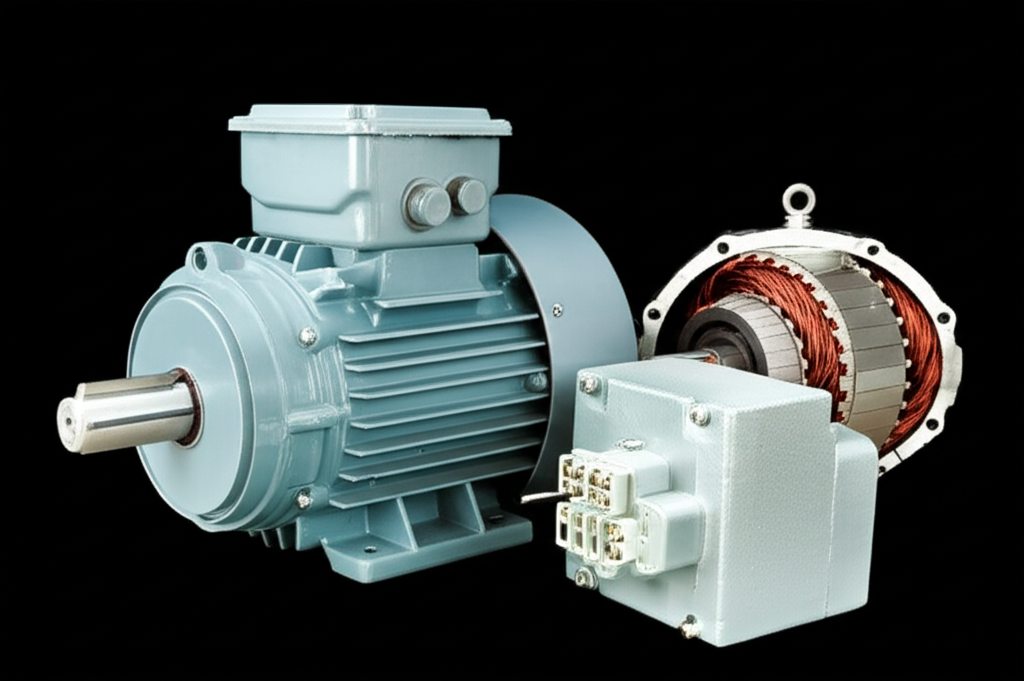
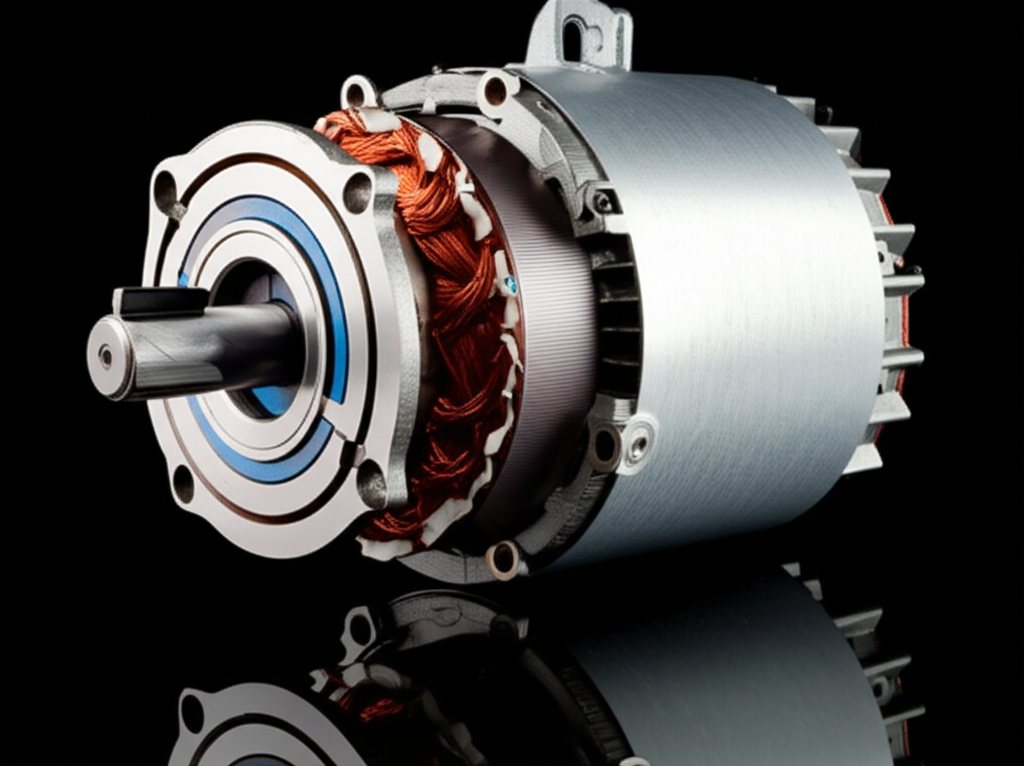
It’s not magic; it’s just better science and smarter engineering. To make a motor more efficient, you have to reduce its energy “losses.” An electric motor has two main parts, the stationary part called the stator and the spinning part called the rotor. How these parts are made is key. To understand more about these crucial components, it’s helpful to see the difference between the stator and rotor.
Manufacturers make IE2 motors better in a few key ways:
Are There Rules Forcing People to Use These Motors?
Yes, absolutely. Governments all over the world realized that wasting energy is a huge problem. So, they created laws and regulations for IE2 motors and higher classes.
In the European Union (EU), for example, rules called the Ecodesign Directive have made IE3 the minimum for most new motors. The US Department of Energy has similar rules, often known as NEMA Premium standards, which are about the same as IE3.
Other big countries like India and China also have their own IE2 motor legislation. The government in India and the China Compulsory Certification (CCC) system set the rules. In many places, IE2 is the absolute lowest efficiency you are allowed to sell or install. These rules are always getting stricter, pushing everyone toward more efficient motors.
What Kinds of Machines Use IE2 Motors?
You can find IE2 motors everywhere! They are the workhorses of industry. They are used in countless industrial applications because they are reliable and save energy.
Here are a few common places you’ll see them:
- Pumps: Moving water or other liquids in factories and buildings.
- Fans: Powering HVAC systems to keep air moving.
- Compressors: Creating compressed air for tools and machines.
- Conveyors: Running the belts that move products in a warehouse.
- Mixers, grinders, and more.
Big companies that make motors, like Siemens, ABB, WEG, and Baldor, all produce huge lines of IE2 and higher-efficiency motors to power these machines.
How Can I Spot an IE2 Motor?
This is the easy part. You don’t have to be a motor expert to identify an IE2 motor. All the information you need is right on the motor itself.
Look for the motor rating plate or nameplate. It’s a small metal tag on the side of the motor. On that plate, you will see a lot of information, like its power in kilowatts (kW) or horsepower (hp). Somewhere on that plate, it should clearly say “IE2.”
If you’re buying a new motor, the IE2 motor specifications sheet from the maker will also list its efficiency class. If you’re ever in doubt, just ask the seller to show you where it says IE2.
Is It Really Worth the Money to Upgrade?
Yes, a thousand times yes! It’s true that an IE2 or IE3 motor might cost a little more to buy than an old, used IE1 motor. But that initial price is a trap. The real cost is in running it.
Let me give you an example. A manufacturing plant in India replaced 20 of its old IE1 motors with new IE2 motors. They spent some money upfront. But they started saving over $6,000 a year on their electric bill! The new motors paid for themselves in about two years. After that, it was pure savings. This is what we call a fast payback period.
When you choose a motor, don’t just look at the price tag. Think about the lifecycle assessment. A high-efficiency motor will save you so much on energy that it’s one of the smartest investments you can make for your business. The cost savings from motor upgrades are real and they are huge.
What’s Coming Next After IE2?
Technology never stops improving. While IE2 was a great step forward, the world is already moving on. The push for even greater energy efficiency continues.
Today, the focus is shifting to IE3 (Premium Efficiency) and IE4 (Super Premium Efficiency) motors. These are becoming the new minimum standards in many regions. They are built with even better designs and materials. At Sinolami, we provide advanced components like our high-performance core lamination stacks to help motor manufacturers achieve these incredible efficiency levels.
Another big trend is pairing efficient motors with a Variable Speed Drive (VSD). A VSD is like a gas pedal for your motor. It lets the motor run at the exact speed needed, instead of being on or off. Combining an IE3 motor with a VSD can cut energy use by 50% or more in some applications. It’s the ultimate way to save.
Key Things to Remember
- IE2 stands for “High Efficiency.” It’s a global grade that proves a motor saves energy.
- They save you money. The biggest cost of a motor is the electricity it uses. IE2 motors use less of it, lowering your bills.
- They are better for the Earth. Using less electricity means a smaller carbon footprint and less pollution.
- Look for the label. You can easily identify an IE2 motor by checking the nameplate on its side.
- Upgrading is a smart investment. Don’t be fooled by a low upfront price. An efficient motor will pay for itself quickly with energy savings.
- The future is even more efficient. The world is moving toward IE3 and IE4 motors, often paired with VSDs, for maximum savings.