What is Motor Efficiency? Understanding, Calculating, and Improving Performance
Of course. Here is the article, written according to your instructions.
I’ve spent years working with industrial machinery, and if there’s one thing I’ve learned, it’s that electric motors are the unsung heroes of our world. They’re everywhere, from the giant pumps in a water treatment plant to the HVAC fans that keep our offices comfortable. But for a long time, I took them for granted. I just assumed that when you plug a motor in, it does its job. It wasn’t until I saw the energy bills for a large facility that I truly understood the staggering importance of one simple term: motor efficiency.
That number, often just a small percentage listed on a nameplate, represents the difference between a lean, cost-effective operation and an energy-guzzling money pit. It’s a concept that seems technical, but once you break it down, it’s incredibly practical. I want to walk you through what I’ve learned about motor efficiency—not just the textbook definitions, but what it actually means in the real world, why it matters so much, and what you can do about it.
Table of Contents
- Introduction to Motor Efficiency
- Deconstructing Motor Efficiency: The Basics
- Why Motor Efficiency Matters (More Than You Think)
- Factors Influencing Motor Efficiency
- Understanding Motor Efficiency Standards and Classes
- How to Improve Motor Efficiency and Reduce Energy Consumption
- Calculating Energy Savings and Payback Periods
- Conclusion: The Long-Term Value of Efficient Motors
Introduction to Motor Efficiency
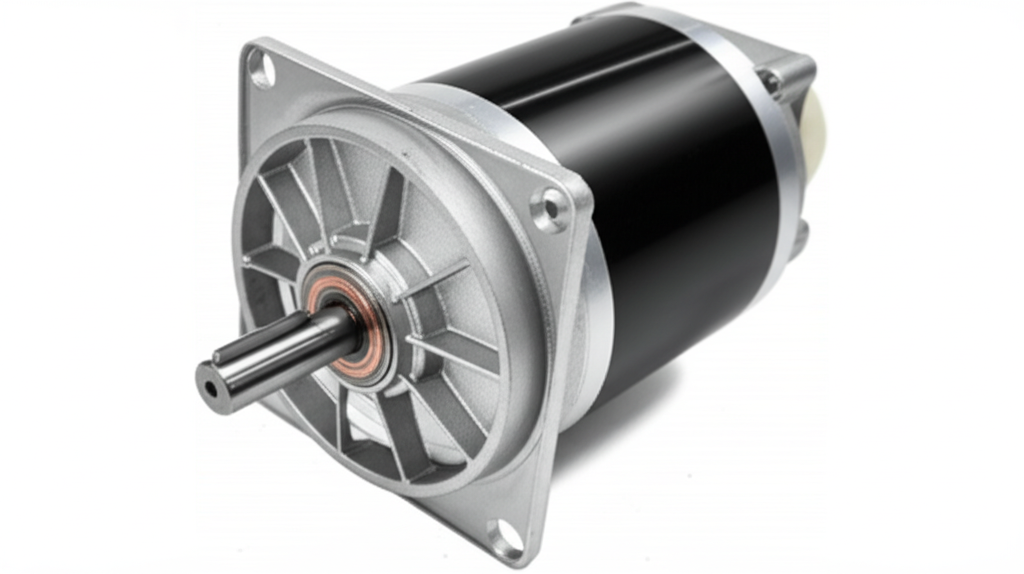
At its heart, motor efficiency is a simple idea. It’s a measure of how well a motor converts electrical energy into useful mechanical work. Think of it like a bucket with a small hole in it. You pour water (input electrical power) into the bucket, but some of it leaks out (losses). What’s left in the bucket to use (output mechanical power) is what you actually get.
Motor efficiency is the ratio of the output power to the input power, expressed as a percentage.
An 85% efficient motor converts 85% of the electricity it consumes into mechanical force. The other 15% is lost, primarily as heat. A 95% efficient motor, on the other hand, only loses 5%. That 10% difference might not sound like much, but when you consider that motors consume nearly half of all global electricity, those small percentages add up to a massive amount of wasted energy and money. This journey starts with understanding the basic motor principle of converting electrical energy to mechanical motion, and efficiency is the measure of how well that conversion happens.
Deconstructing Motor Efficiency: The Basics
To really get a grip on this, we need to look at the numbers and the forces at play. It’s not as complicated as it sounds, I promise.
How Motor Efficiency is Defined
The formula itself is straightforward:
Efficiency (%) = (Output Power / Input Power) x 100
The tricky part is understanding what goes into “Input Power” and “Output Power.”
- Input Power (Electrical Power): This is the electricity you’re pulling from the grid. We measure it in watts (W) or kilowatts (kW). It’s a function of voltage, current, and something called the power factor (a measure of how effectively the current is being converted into useful work).
- Output Power (Mechanical Power): This is the actual work the motor is doing—turning a shaft, pumping water, or moving a conveyor belt. It’s measured in horsepower (HP) or watts and is calculated from the motor’s torque (rotational force) and speed.
Why 100% Efficiency is Impossible: The Role of Losses
So, where does that “lost” energy go? It doesn’t just vanish; it gets converted into other things, mostly heat, due to various losses within the motor. I think of these as the “leaks in the bucket.” In my experience, understanding these losses is the key to understanding efficiency.
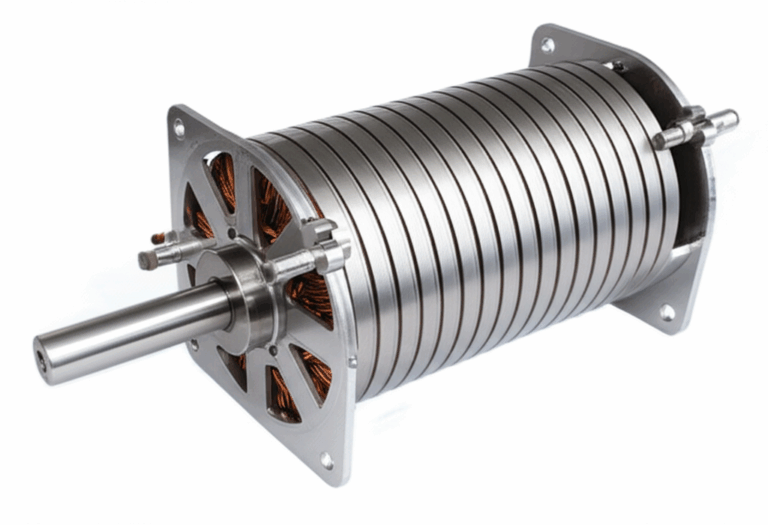
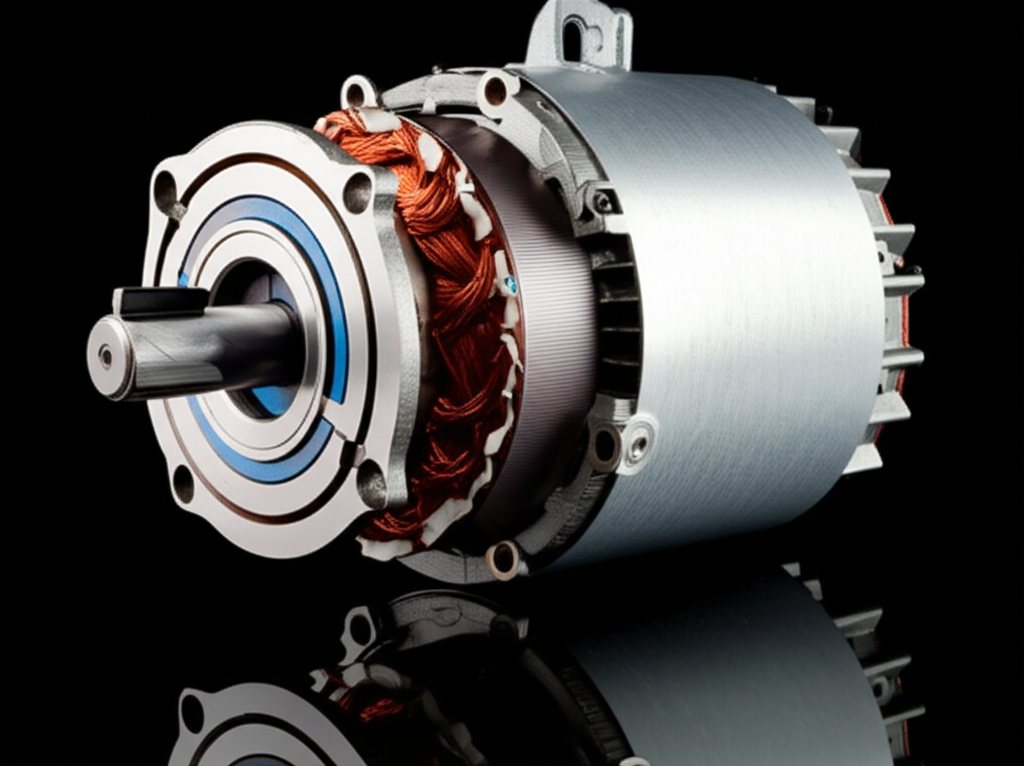
- Copper Losses (I²R Losses): This is the big one. It’s simply the heat generated by electrical current flowing through the copper windings of the motor’s stator and rotor. The more current a motor draws, the higher these losses become.
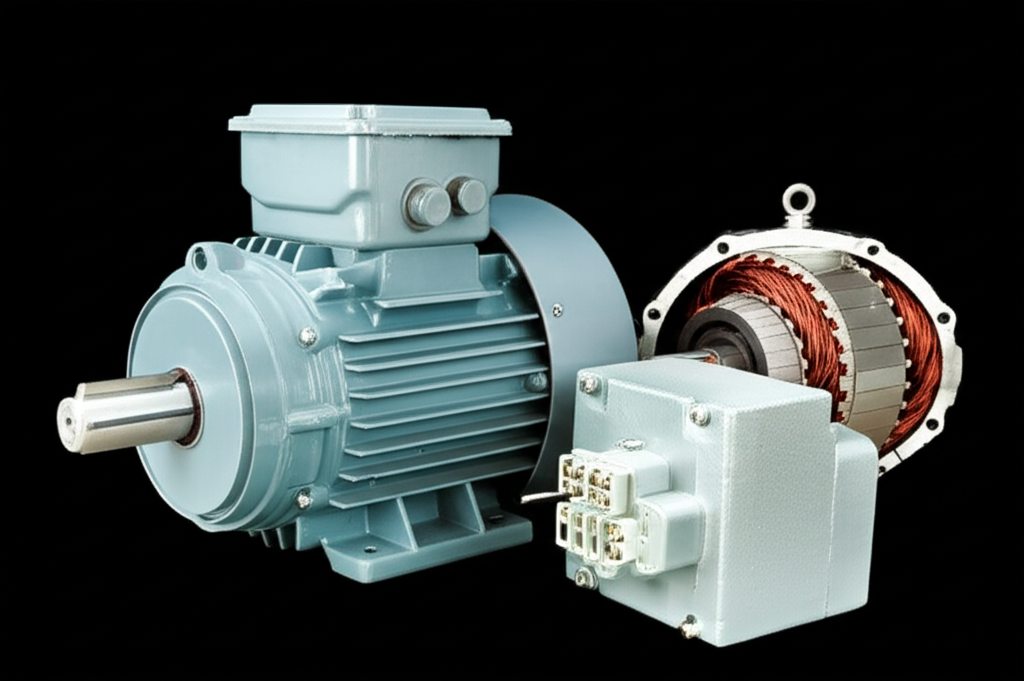
- Iron Losses (Core Losses): This is where the quality of the motor’s construction really shows. These losses occur in the magnetic core of the motor. As the magnetic field rapidly changes, it generates heat in the steel core. This is why high-efficiency motors use better quality electrical steel laminations with special coatings to minimize this effect. The design of the stator and rotor is absolutely critical here.
- Friction: You can’t escape it. There’s friction in the motor’s bearings that hold the shaft. Over time, as bearings wear out, this friction increases, and efficiency drops.
- Windage: This is essentially air resistance. The motor has an internal fan to cool itself, and that fan, along with the spinning rotor, creates air drag. This requires energy to overcome.
Every single one of these losses generates heat. That’s why an inefficient motor runs hot—it’s literally radiating your money away as wasted thermal energy.
Why Motor Efficiency Matters (More Than You Think)
When I first started paying attention to this, the numbers shocked me. We often focus on the purchase price of a motor, but that’s a classic mistake.
The data from the U.S. Department of Energy is eye-opening: energy costs account for about 97% of a motor’s total lifecycle cost. The initial purchase price is a mere 2-3%. Think about that. You might save a few hundred dollars on a cheaper, less efficient motor, but you could end up paying thousands more in electricity bills over its lifetime.
- Financial Impact: This is the most direct benefit. A more efficient motor uses less electricity to do the same amount of work. This translates directly to lower utility bills. For a facility with hundreds of motors, upgrading to high-efficiency models can lead to six-figure annual savings.
- Environmental Benefits: In a world focused on sustainability, this is huge. Since motors use over 70% of all industrial electricity, improving their efficiency is one of the most impactful ways a company can reduce its carbon footprint. Less energy consumed means fewer emissions from power plants.
- Reliability and Performance: Efficient motors run cooler because they waste less energy as heat. Heat is the enemy of a motor’s insulation and bearings. A cooler motor lasts longer, requires less maintenance, and is less likely to fail unexpectedly, which means less downtime and fewer production losses.
Factors Influencing Motor Efficiency
A motor’s efficiency isn’t just a fixed number on a label. It’s a dynamic value that can change based on several factors. I’ve seen these play out in the field time and time again.
- Motor Design and Construction: This is the foundation. A manufacturer can design a motor for higher efficiency by using more copper in the windings, higher-grade steel for the motor core laminations, smaller air gaps between the rotor and stator, and better bearings. This is why premium efficiency motors cost more—they are built with better materials and tighter tolerances.
- Operating Load: This is one of the most misunderstood aspects. A motor is most efficient when it’s running at about 75-95% of its full rated load. I’ve seen countless situations where a motor is oversized for its application—for example, using a 50 HP motor for a job that only needs 25 HP. When a motor is severely underloaded, its efficiency plummets. It’s like using a massive truck to deliver a small pizza; most of the fuel is wasted just moving the truck.
- Power Quality: Motors are designed to run on a clean, stable supply of electricity. Problems like voltage imbalance (where the voltage across the three phases of power isn’t equal) or harmonics (distortions in the electrical waveform) can cause a motor to run hotter and less efficiently. A mere 1% voltage imbalance can increase motor losses by 6-10%!
- Age and Maintenance: Like any machine, motors wear out. Bearings degrade, increasing friction. Winding insulation can break down, leading to electrical losses. A regular maintenance schedule that includes proper lubrication, vibration analysis, and cleaning is crucial for maintaining peak efficiency.
Understanding Motor Efficiency Standards and Classes
To help buyers make informed decisions, global standards have been developed to classify motor efficiency. It’s like the energy rating on your refrigerator, but for industrial equipment.
The most common system you’ll see is the International Efficiency (IE) code:
- IE1 (Standard Efficiency): These are older, less efficient motors that are now phased out in many parts of the world for new installations.
- IE2 (High Efficiency): This was the next step up, offering a decent improvement over IE1.
- IE3 (Premium Efficiency): This is the current mandatory minimum standard in many regions, including the US and Europe. These motors offer significant energy savings over older models.
- IE4 (Super Premium Efficiency): This is the top tier. IE4 motors often use advanced technologies like permanent magnet rotors to achieve even lower losses. They represent the cutting edge of motor design.
In North America, you’ll also hear about NEMA Premium Efficiency, which is largely harmonized with the IE3 standard. When you look at a motor’s nameplate, you should be able to find its IE or NEMA rating. This tells you exactly where it stands in the efficiency hierarchy.
How to Improve Motor Efficiency and Reduce Energy Consumption
Alright, this is the practical part. Knowing what efficiency is great, but how do you actually capture those savings? Here are the strategies I’ve seen work best.
Calculating Energy Savings and Payback Periods
When you’re trying to justify an upgrade, you need to speak the language of money. Calculating the potential savings and the payback period is how you get a project approved.
Let me give you a simplified example I often use.
Imagine you have an old 100 HP motor that’s 80% efficient. It runs 8,000 hours a year, and your electricity costs $0.10 per kWh. You’re thinking of replacing it with a new NEMA Premium (IE3) motor that’s 94% efficient.
Step 1: Calculate the input power of the old motor.
- 1 HP = 0.746 kW
- Output Power = 100 HP * 0.746 kW/HP = 74.6 kW
- Input Power (Old) = Output Power / Efficiency = 74.6 kW / 0.80 = 93.25 kW
Step 2: Calculate the input power of the new motor.
- Input Power (New) = Output Power / Efficiency = 74.6 kW / 0.94 = 79.36 kW
Step 3: Find the power savings.
- Power Savings = 93.25 kW – 79.36 kW = 13.89 kW
Step 4: Calculate annual energy and cost savings.
- Annual Energy Savings = 13.89 kW * 8,000 hours/year = 111,120 kWh
- Annual Cost Savings = 111,120 kWh * $0.10/kWh = $11,112 per year!
If the incremental cost of the new premium motor over a standard one is, say, $8,000, the simple payback period is less than a year ($8,000 / $11,112). I’ve seen real-world scenarios just like this. The numbers are often too compelling to ignore.
Conclusion: The Long-Term Value of Efficient Motors
What started for me as a line item on a utility bill has turned into a deep appreciation for the power of efficiency. An electric motor is not a one-time purchase; it’s a long-term operational investment. By focusing on motor efficiency, you’re not just making a smart financial decision that lowers operating costs. You’re also improving the reliability of your equipment, reducing your environmental impact, and building a more sustainable and resilient operation.
My advice is simple: start looking at your motors not just as machines that do a job, but as major consumers of energy. The next time you walk past one, take a moment to look at the nameplate. That little efficiency percentage tells a big story about your operational costs and your commitment to a smarter, more sustainable future.