Why Detroit is Known as Motor City: Tracing Its Unrivaled Automotive Legacy
If you’ve ever heard of Detroit, Michigan, you’ve almost certainly heard its most famous nickname: Motor City. It’s a title that feels as essential to the city’s identity as the steel and glass towers that shape its skyline. But have you ever stopped to wonder why? This isn’t just a catchy phrase; it’s a testament to a revolutionary history that put the entire world on wheels and forever changed the course of modern industry. Detroit wasn’t just a city that built cars; for a long time, it was the city.
The story of how Detroit earned its “Motor City” moniker is a sprawling epic of ingenuity, ambition, and industrial might. It’s a tale of visionary pioneers, groundbreaking technology, and the complete transformation of a city into the undisputed automobile capital of the world. From the first sputtering engines on its streets to the global headquarters of automotive giants, Detroit’s legacy is welded to the very soul of the automobile. In this deep dive, we’ll trace the historical reasons for this iconic nickname, exploring the innovations that sparked a revolution and examining why, even today, Detroit’s automotive heritage remains unshakeable.
What We’ll Cover
- The Genesis of Automotive Innovation in Detroit: Unpacking the perfect storm of resources, location, and talent that made the city fertile ground for a new industry.
- Henry Ford & The Mass Production Revolution: How one man’s vision for an affordable car and a revolutionary manufacturing process changed everything.
- The Rise of the “Big Three” Automotive Powerhouses: Exploring how Ford, General Motors, and Chrysler created an automotive dynasty centered in Detroit.
- Detroit’s Golden Age: The Global Automotive Capital: A look at the era when Detroit’s industrial power was unmatched, shaping its economy, culture, and its role in history.
- Challenges & Transformation: Adapting to a Changing World: Understanding the difficult periods of global competition and economic downturns that tested the city’s resilience.
- The Enduring Legacy & Future of Motor City: Why the nickname still holds true as Detroit pioneers the next generation of mobility with electric and autonomous vehicles.
The Genesis of Automotive Innovation in Detroit
Long before the first car rolled off an assembly line, Detroit was already a bustling industrial hub. You could say the city had the right ingredients simmering long before the automotive recipe was perfected. Its strategic location on the Detroit River, a key part of the Great Lakes waterway, made it a natural center for shipping and trade. Michigan was rich in natural resources like timber and iron ore—the essential building blocks for heavy industry.
This environment fostered a highly skilled workforce. The city was a leader in carriage and wagon manufacturing, which meant it had a deep pool of craftsmen, woodworkers, and metalworkers who understood the intricacies of building personal vehicles. They were the perfect talent base, ready to pivot from horse-drawn carriages to “horseless” ones.
Into this ripe setting stepped a handful of brilliant and determined pioneers. While many people were experimenting with automobiles across the country, a few key figures in Detroit kickstarted the movement. One of the first was Ransom E. Olds, who established the Olds Motor Works. In 1899, he produced the first curved-dash Oldsmobile in Detroit, creating one of the earliest mass-produced gasoline-powered cars and proving that a market for these new machines existed.
But it was another name that would become synonymous with the automobile itself: Henry Ford. Ford, a gifted and obsessive engineer, built his first vehicle, the Quadricycle, in a small workshop behind his Detroit home in 1896. His early companies had fits and starts, but his relentless drive to create a simple, reliable, and affordable car laid the foundation for the revolution to come. The presence of innovators like Ford and Olds, combined with a network of foundries, machine shops, and a ready workforce, created a powerful magnetic pull. Detroit quickly became the epicenter of this radical new industry, drawing in more talent, more capital, and more ambition. It was the perfect cradle for the birth of the automobile age.
Henry Ford & The Mass Production Revolution
If early pioneers lit the spark, it was Henry Ford who fanned it into an inferno that consumed the world. His single-minded obsession wasn’t just with building a car, but with building a car for the masses. This philosophy culminated in the legendary Model T.
Introduced in 1908, the Model T wasn’t the fastest or fanciest car, but it was durable, easy to repair, and, most importantly, affordable. When it first launched, it cost $850 (around $28,000 in today’s money), but Ford was determined to drive that price down. To do that, he needed to build them faster and more efficiently than anyone had ever imagined.
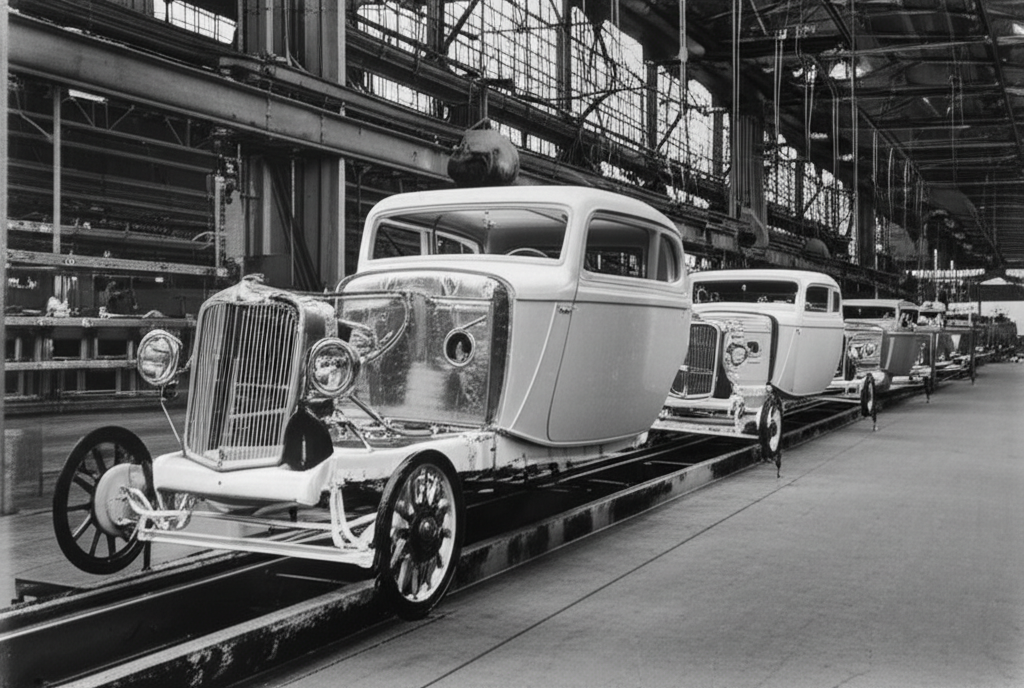
His solution was the moving assembly line, a concept he perfected at his Highland Park Plant in 1913. It was a stroke of industrial genius. Before the assembly line, workers would move from one stationary chassis to another, performing multiple tasks. Ford flipped the script entirely. He brought the work to the worker. A bare chassis would move along a conveyor, and each worker would perform a single, specialized task over and over again.
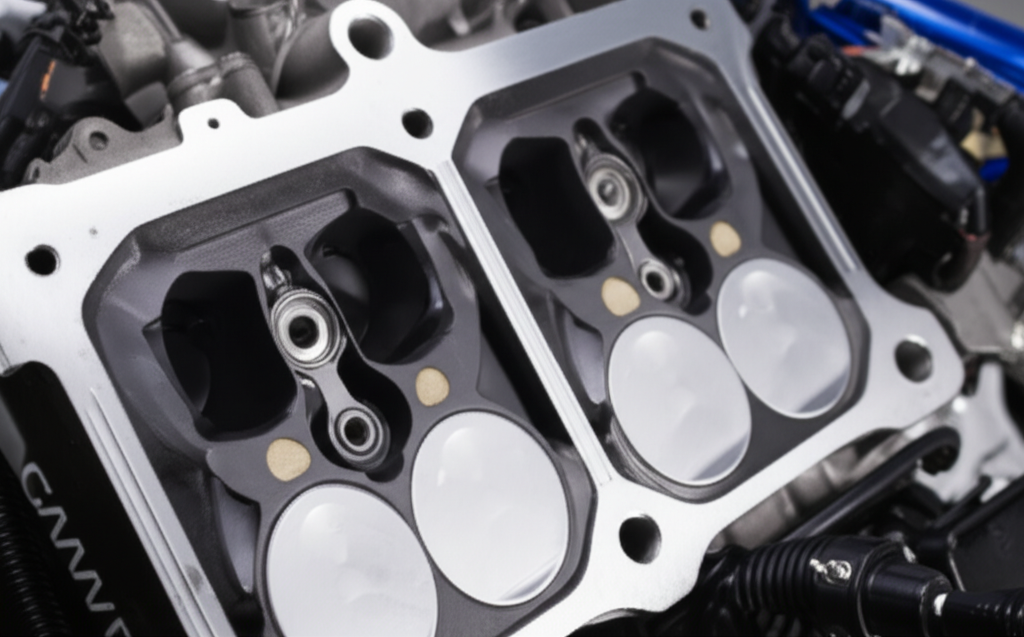
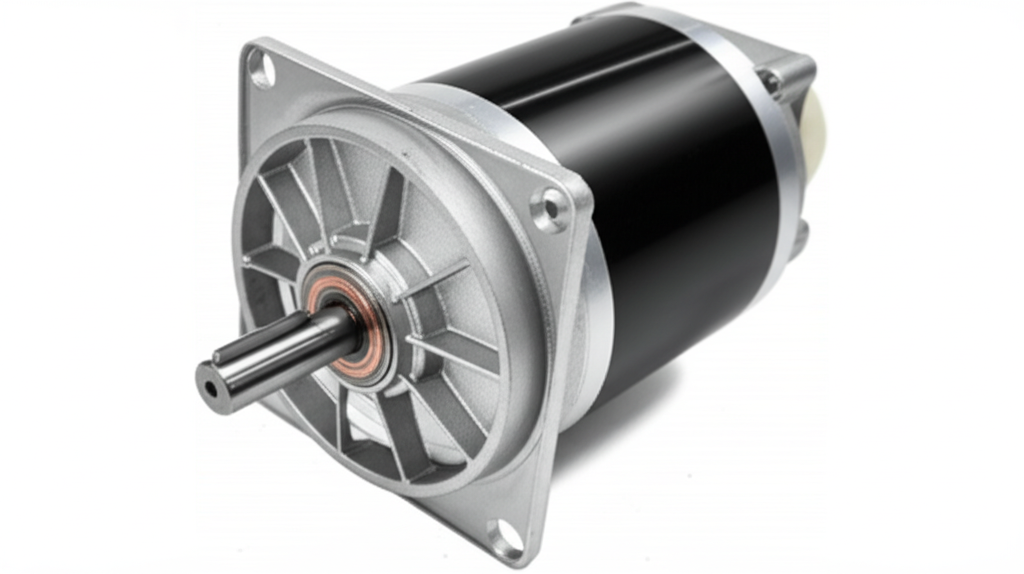
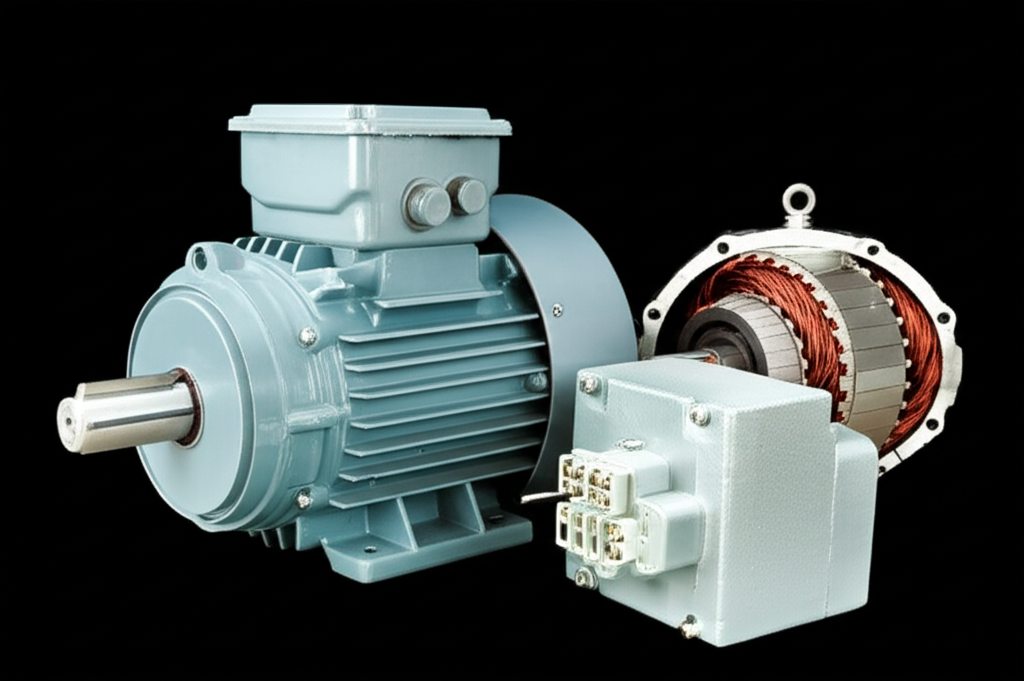
The results were nothing short of staggering. The time it took to assemble a Model T chassis plummeted from over 12 hours to just 93 minutes. This incredible efficiency allowed Ford to slash the price of the Model T, making it accessible to the average American family. By 1923, Ford was producing over 2 million Model T units in a single year. The car had officially been democratized, and the assembly line became the global standard for mass production. This breakthrough didn’t just cement Ford Motor Company’s dominance; it cemented Detroit’s identity as the place where the future was being built, one car at a time. The powerful engines in these vehicles, comprised of fundamental components like the stator and rotor, were the beating heart of this new era of mobility.
The Rise of the “Big Three” Automotive Powerhouses
While Henry Ford may have been the most famous trailblazer, he wasn’t alone. The explosive growth of the auto industry created a gravitational pull that gave rise to two other corporate titans, and together they formed an automotive triumvirate known as the “Big Three.” Their consolidation of power in and around Detroit ensured the city’s place as the industry’s command center.
Ford Motor Company: Already a giant thanks to the Model T, Ford continued to innovate with massive industrial complexes like the River Rouge Plant, a marvel of vertical integration where raw materials went in one end and finished cars rolled out the other. Ford established a legacy of producing tough, practical vehicles for the American everyman.
General Motors (GM): Formed by the visionary William C. Durant, GM took a different approach. While Ford famously offered the Model T in any color “so long as it is black,” GM, under the leadership of Alfred P. Sloan, pioneered the concept of brand diversification. They created a “ladder” of brands to appeal to every possible consumer, from the entry-level Chevrolet to the luxurious Cadillac, with Pontiac, Oldsmobile, and Buick filling the rungs in between. This strategy of offering choice and style was wildly successful and made GM the largest automaker in the world for decades.
Chrysler Corporation: The last of the Big Three to form, Chrysler was established by the brilliant former GM executive Walter P. Chrysler. The company quickly earned a reputation for its engineering prowess and innovative features. It competed fiercely with Ford and GM, often positioning itself as a more engineering-focused and stylistically daring alternative, solidifying the competitive landscape.
By the mid-20th century, the dominance of these three companies was absolute. In the 1950s and 60s, the Big Three consistently held over 90% of the entire U.S. automotive market share. With their headquarters, engineering centers, and largest factories all located in the Detroit metropolitan area—in cities like Dearborn, Warren, and Auburn Hills—the region’s identity was inextricably linked with their fortunes. You simply couldn’t talk about the American auto industry without talking about Detroit.
Detroit’s Golden Age: The Global Automotive Capital
The rise of the Big Three ushered in Detroit’s golden age. The city wasn’t just an industrial center; it became the undisputed “Automobile Capital of the World.” The economic boom was seismic. The promise of high-paying, stable jobs on the assembly line acted as a powerful magnet.
Between 1900 and 1930, Detroit’s population exploded from just over 285,000 to 1.5 million. This growth was fueled by waves of migration, including the Great Migration of African Americans from the rural South and immigrants from Europe, all seeking a piece of the prosperity the auto industry offered. This influx of people created a vibrant, diverse, and bustling metropolis. The auto industry effectively built the American middle class, and Detroit was its cradle.
The city became a hub of innovation that went far beyond the factory floor. It was home to the world’s best automotive designers, engineers, and marketers. The annual auto show, which would eventually become the North American International Auto Show, was the premiere event for showcasing the latest models and futuristic concepts.
This industrial might took on a new and vital purpose during World War II. As the nation mobilized for war, President Franklin D. Roosevelt called on Detroit to become the “Arsenal of Democracy.” The city’s auto factories seamlessly converted their operations from building cars to producing the machinery of war. In an incredible display of manufacturing prowess, Detroit’s workforce produced a staggering volume of equipment. Between 1941 and 1945, the city’s plants churned out an estimated 25% of the total U.S. wartime production, including tens of thousands of planes, tanks, and engines. This effort was a powerful demonstration of Detroit’s industrial capacity and solidified its importance not just to the nation’s economy, but to its very security.
Challenges & Transformation: Adapting to a Changing World
No golden age lasts forever. By the 1970s, the landscape that Detroit had dominated for so long began to shift dramatically. The oil crises of 1973 and 1979 sent shockwaves through the industry. Suddenly, the large, gas-guzzling cars that were a hallmark of American automakers fell out of favor as consumers clamored for smaller, more fuel-efficient vehicles.
This opened the door for global competition. Automakers from Japan and Germany, who had perfected the art of building high-quality, efficient cars, began to capture a significant share of the American market. For decades, Detroit had operated with little serious competition. Now, it was in a global fight for survival.
The subsequent decades were a period of painful adjustment. Economic recessions, labor disputes, and the decentralization of manufacturing—as automakers opened plants in other parts of the country and the world—took a heavy toll on the city. The challenges culminated in the financial crisis of 2008, which pushed General Motors and Chrysler to the brink of collapse. The U.S. government intervened with the Auto Industry Bailout, a massive $80.7 billion financial assistance package. The move was controversial, but it was estimated to have prevented the loss of 1.5 million jobs and the complete collapse of the American automotive supply chain.
This period forced a difficult but necessary restructuring. The Big Three shed legacy costs, invested in new technologies, and streamlined their operations to become leaner and more competitive. While the city faced significant hardship, including urban decay and population loss, the crisis also sparked a new wave of innovation and a drive toward diversification, laying the groundwork for a modern comeback.
The Enduring Legacy & Future of Motor City
So, in an era of global manufacturing and technological disruption, is the “Motor City” nickname still relevant? The answer is a resounding yes. While Detroit may no longer be the sole center of auto production, its role as the industry’s heart and brain is stronger than ever.
The cultural significance of Detroit’s automotive legacy is undeniable. It gave us the muscle car, the quintessential symbol of American freedom and power. The legendary Woodward Avenue became the crucible of street racing culture. This car-centric identity even influenced the city’s music, with the rhythms of the assembly line famously echoing in the beats of Motown.
Today, Metro Detroit remains the nerve center of the American auto industry. It’s home to the headquarters and primary research and development centers for Ford, GM, and Stellantis (Chrysler’s parent company). Michigan ranks #1 in the U.S. for automotive R&D spending, pouring over $12 billion annually into designing the next generation of vehicles. The critical components inside these new machines, especially in electric vehicles, rely on advanced materials and manufacturing. High-performance motor core laminations are essential for efficiency and power delivery in modern drivetrains.
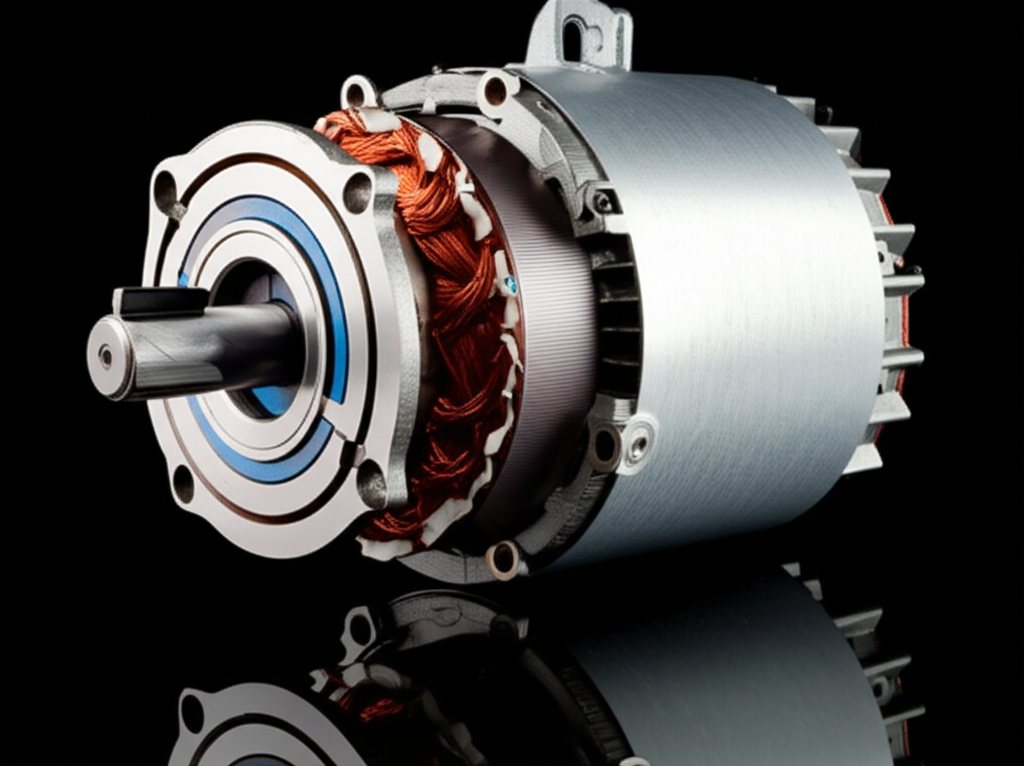
Most importantly, Detroit has embraced its role in pioneering the future of mobility. The city and its surrounding region are at the forefront of the electric vehicle (EV) and autonomous vehicle (AV) revolution. The Big Three are investing billions of dollars in new battery plants and retooling factories across Michigan for EV production. This shift requires a whole new set of technologies, from sophisticated software to advanced materials like specialized electrical steel laminations that are crucial for building efficient and powerful electric motors. Companies and research centers in the region are developing sophisticated components like the bldc stator core, pushing the boundaries of what’s possible in vehicle propulsion. This isn’t just about changing how cars are powered; it’s about reinventing the very concept of transportation, and Detroit is once again leading the charge.
Conclusion: Why Detroit’s Motor City Identity Remains Unshakeable
Detroit’s “Motor City” nickname is far more than a historical footnote; it’s a living identity forged in the fires of industrial revolution and tempered by resilience. The title was earned through a unique convergence of factors: the visionary spirit of pioneers like Henry Ford and Ransom E. Olds, the game-changing innovation of the moving assembly line, the sheer dominance of the Big Three, and the unwavering dedication of its workforce that turned the city into the Arsenal of Democracy.
From putting the world on wheels with the Model T to defining American culture through its iconic vehicles, Detroit’s impact is immeasurable. The city has weathered economic storms, faced down global competition, and navigated painful transformations. Yet, through it all, its connection to the automobile has never been broken.
Today, as the industry undergoes its most significant transformation yet, Detroit is not looking in the rearview mirror. It is firmly in the driver’s seat, steering the world toward an electric and autonomous future. The factories are being reborn, the engineering centers are buzzing with new ideas, and the entrepreneurial spirit that first sparked the automotive age is alive and well. The name “Motor City” is a tribute to its past, a reflection of its present, and a promise for its future. It is, and always will be, the heart of the automotive world.